Aurum Resources (AUE:AU) has announced More high grade gold intercepts at BMT3 in Boundiali
Download the PDF here.
Aurum Resources (AUE:AU) has announced More high grade gold intercepts at BMT3 in Boundiali
Download the PDF here.
Senate Republicans confirmed nearly 100 of President Donald Trump’s nominees, leapfrogging previous administrations and his own first term in the process in their sprint to finish off the year.
The confirmation of 97 of Trump’s picks on Thursday with a 53-43 vote marked one of the final bits of floor action in the upper chamber following a blistering pace set out by Senate Majority Leader John Thune, R-S.D., once Republicans gained control of the Senate in January.
Senate Republicans overcame several obstacles throughout the year, including mending intra-party rifts to pass the president’s signature legislation, the ‘one big, beautiful bill,’ and reopening the government after the longest shutdown in history.
But it was confirming Trump’s nominees that proved near impossible within the confines of Senate rules, given that Senate Democrats laid out a blanket objection to even the lowest level positions throughout the government.
Senate Majority Whip John Barrasso, R-Wyo., noted that Republicans kicked off the year by confirming Trump’s Cabinet at a breakneck pace, but they soon slammed into a wall of ‘unprecedented obstruction from the Democratic minority.’
‘We began the year by confirming President Trump’s Cabinet faster than any Senate in modern history,’ Barrasso said. ‘And by week’s end, President Trump will have 417 nominees confirmed by the Senate this year. That’s far more than the 365 that Joe Biden had in his first year in office.’
In response, Republicans turned to the nuclear option in September and changed the vote threshold for confirming sub-Cabinet-level positions, and have since confirmed 417 of Trump’s picks.
Thune argued that Senate Democrats, led by Senate Minority Leader Chuck Schumer, D-N.Y., were engaging in ‘nothing more than petty politics,’ not allowing nominees through the typical fast-track processes, like voice votes or unanimous consent, to install low-level presidential nominations.
‘Democrats cannot deal with the fact that the American people elected President Trump, and so they’ve engaged in this pointless political obstruction in revenge,’ Thune said.
With the latest batch of confirmations, Senate Republicans have nearly cleared the backlog of nominees that over the summer had ballooned to nearly 150 picks awaiting lawmakers’ decision. Now, there are only 15 picks left to be confirmed.
Among the list of now-confirmed nominees are former Rep. Anthony D’Esposito, R-N.Y., to serve as inspector general at the Department of Labor and two picks for the National Labor Relations Board, James Murphy and Scott Mayer, along with several others in nearly every federal agency.
Lawmakers are set to tee up another nominee, Joshua Simmons, who Trump tapped to be the CIA’s special counsel, before the night is over. And they’re still working to move forward with a colossal spending package that ties five appropriations bills together.
But some Senate Democrats are objecting to the minibus spending package, jeopardizing its chances of hitting the floor before lawmakers flee Capitol Hill. Conversations between Republicans and Democrats are ongoing, and could go deep into the night on a path forward.
Thune, as he walked onto the Senate floor Thursday night, said that the plan was to at least knock out the nominees package first.
‘We’ll see where it goes from there,’ he said.
Maria Shriver slammed President Donald Trump on Thursday after the Kennedy Center’s board voted unanimously to rename the institution to the ‘Trump-Kennedy Center,’ accusing him of trying to attach his name to a memorial dedicated to her uncle, President John F. Kennedy.
Shriver, a high-profile member of the Kennedy family, said it is ‘beyond comprehension’ to change the center’s name, accusing Trump of staining JFK’s legacy in art, culture and education.
‘It is beyond comprehension that this sitting president has sought to rename this great memorial dedicated to President Kennedy,’ Shriver wrote on X. ‘It is beyond wild that he would think adding his name in front of President Kennedy’s name is acceptable. It is not.’
Kennedy Center vice president of public relations Roma Daravi told Fox Digital Thursday that the unanimous vote ‘recognizes’ Trump’s work to pull the center out of financial straits while working to also update the building originally constructed in the 1960s, and opened in 1971.
Shriver argued that adding Trump’s name was not ‘dignified’ or ‘funny,’ and ‘is way beneath the stature of the job.’
‘Just when you think someone can’t stoop any lower, down they go,’ she said.
The former First Lady of California quipped that Trump might want to rename JFK Airport or make other changes, including the ‘Trump Lincoln Memorial,’ ‘Trump Jefferson Memorial’ and ‘Trump Smithsonian.’
‘Can we not see what is happening here?’ Shriver said. ‘C’mon, my fellow Americans! Wake up!’
President Trump said on Thursday he was ‘honored’ and ‘surprised’ by the update.
‘We’re saving the building. We saved the building. The building was in such bad shape, physically, financially, in every other way. And now it’s very solid, very strong. We have something going on television, I guess on the 23rd December. I think it’s going to get very big ratings and the Kennedy Center is really, really back strongly,’ he told reporters.
Other members of the Kennedy family, including JFK’s great-nephew, Joe Kennedy III, weighed in on the name change, arguing that federal law protects the center’s name from being changed.
‘It can no sooner be renamed than can someone rename the Lincoln Memorial, no matter what anyone says,’ he wrote on X.
The name change follows recent precedent, a Kennedy Center official told Fox News Digital, noting that the State Department’s decided earlier this month to add Trump’s name to the U.S. Institute of Peace and to past presidential administrations that have renamed military bases.
Fox News Digital has reached out to the White House for comment.
Fox News Digital’s Ashley Carnahan and Emma Colton contributed to this report.
Joint Task Force Southern Spear forces struck two alleged narco-terrorist vessels moving along a major drug corridor in the Eastern Pacific on Thursday, killing five militants without suffering any U.S. casualties.
U.S. Southern Command (SOUTHCOM) released a video on X showing the opening strike and the aftermath, with the targeted boat engulfed in flames.
‘On Dec. 18, at the direction of [Secretary of War] Pete Hegseth, Joint Task Force Southern Spear conducted lethal kinetic strikes on two vessels operated by Designated Terrorist Organizations in international waters,’ the post read. ‘Intelligence confirmed that the vessels were transiting along known narco-trafficking routes in the Eastern Pacific and were engaged in narco-trafficking operations.
‘A total of five male narco-terrorists were killed during these actions — three in the first vessel and two in the second vessel,’ SOUTHCOM added. ‘No U.S. military forces were harmed.’
Joint Task Force Southern Spear was established to help unify Navy, Coast Guard, intelligence and special operations assets to rapidly strike time-sensitive targets at sea.
The Pentagon has not released the identities of the four narco-terrorists killed or the specific terrorist organization involved.
The U.S. has conducted dozens of strikes on suspected drug-trafficking vessels in the Eastern Pacific and Caribbean to dismantle narco-terrorist networks, targeting groups such as Venezuela’s Tren de Aragua and Colombia’s Ejército de Liberación Nacional.
The campaign began Sept. 2 with a strike that killed 11 alleged members of Tren de Aragua, followed by additional operations that reportedly eliminated dozens more across known trafficking routes.
U.S. forces have reportedly hit various types of vessels, including submersibles, fishing boats and high-speed vessels.
Earlier this month, the Trump administration launched its ‘Fentanyl Free America’ plan, with the Drug Enforcement Administration (DEA) reporting that strikes on suspected Caribbean drug vessels are helping curb the flow of illegal drugs into the U.S.
Fox News Digital’s Bonny Chu contributed to this report.
Those worried about shuttering the U.S. Agency for International Development (USAID) were wrong, according to Secretary of State Marco Rubio, who touted the agency’s record in delivering support in the wake of Hurricane Melissa that ravaged the Caribbean in October.
Although USAID historically functioned as an independent agency to deliver aid to impoverished countries and development assistance, the State Department announced in March that it would absorb remaining operations and functions in an effort to streamline operations to deliver foreign assistance amid concerns that USAID did not advance U.S. core interests. The move resulted in cuts for thousands of USAID employees.
Critics including Sen. Bernie Sanders, I-Vt., said that upending the agency would ‘lead to millions of preventable deaths,’ while a group of House Democrats wrote a letter to President Donald Trump in February as USAID cuts got underway that changes would lead to increased maternal and child mortality.
But Rubio now claims those skeptics’ fears were unfounded.
‘Alarmists in politics and the media forecasted that the closure of USAID would result in catastrophe. Now, nearly a year later, they’ve been proven wrong,’ Rubio said in a statement to Fox News Digital. ‘The State Department has realigned foreign assistance with the interests of the American people, streamlined disaster response capabilities, and leveraged the ingenuity of American companies to save lives.’
Specifically, Rubio pointed to the assistance the State Department provided in the aftermath of Hurricane Melissa, which hit Jamaica as a Category 5 hurricane and was the strongest to strike Kingston since the island started tracking its storms 174 years ago.
The State Department deployed a regional disaster assistance response team (DART) and activated U.S.-based urban search and rescue (USAR) teams to support response efforts in the region as part of recovery efforts.
Likewise, the State Department allocated roughly $1 million to go toward administering food and other resources to those in need, using predesignated supplies housed in 12 different warehouses across the region. Ultimately, the State Department coordinated with the United Nations World Food Program to distribute 5,000 family food packs to families in Jamaica.
‘This new era of foreign assistance eliminates extreme ideological projects that previous administrations forced the American people to subsidize, cuts out the wasteful NGO industrial complex, and puts the American people first,’ Rubio said.
Sanders’ office did not respond to a request for comment from Fox News Digital.
The Department of Government Efficiency (DOGE) targeted USAID in its push to eliminate wasteful spending during a review earlier in 2025. The agency attracted scrutiny for a series of funding choices, including allocating $1.5 million for a program that sought to ‘advance diversity, equity and inclusion in Serbia’s workplaces and business communities’ and a $70,000 program for a ‘DEI musical’ in Ireland.
USAID was officially closed down in July — a move that attracted criticism from Democrats and former Presidents George W. Bush and Barack Obama.
‘Gutting USAID is a travesty, and it’s a tragedy,’ Obama said in a video that was shown to departing USAID employees, according to The Associated Press. ‘Because it’s some of the most important work happening anywhere in the world.’
Obama labeled the decision to upend USAID ‘a colossal mistake,’ and said, ‘sooner or later, leaders on both sides of the aisle will realize how much you are needed.’
Meanwhile, the State Department is undergoing its own transformation. In addition to absorbing USAID, the State Department has undergone a massive overhaul as part of the largest restructuring for the agency since the Cold War.
Additionally, it rolled out an America First Global Health Strategy in September to deliver health aid worldwide by working directly with recipient country’s governments instead of through non-governmental organizations and other aid programs.
In December, Kenya became the first country to sign a five-year, $2.5 billion Health Cooperation Framework agreement with the U.S. in alignment with this new strategy, which also aims for recipient countries to eventually bear more responsibility for their own health expenditures.
Fox News’ Emma Colton contributed to this report.
President Trump signed into law a nearly $1 trillion defense policy bill Thursday and approved what looks to be the largest military spending package in U.S. history.
The fiscal 2026 National Defense Authorization Act authorizes $901 billion in military spending, roughly $8 billion more than the administration requested, according to Reuters.
It also delivers a nearly 4% pay raise for troops, provides new funding for Ukraine and the Baltic States and includes measures designed to scale back security commitments abroad.
In a release shared online, Rep. Rick Allen, R-Ga., said, ‘With President Trump’s signature, the FY2026 NDAA officially delivers on our peace-through-strength agenda with a generational investment in our national defense.
‘Not only does this bipartisan bill ensure America’s warfighters are the most lethal and capable fighting force in the world, but it also improves the quality of life for our service members in the 12th District and nationwide.’
As previously reported by Fox News Digital, the Senate passed the NDAA Wednesday, sending the compromise bill approved with bipartisan support to the president’s desk.
Trump signed it quietly Thursday evening, according to Reuters.
The NDAA includes $800 million for Ukraine over the next two years as part of the Ukraine Security Assistance Initiative, which pays U.S. firms for weapons for Ukraine’s military.
It also includes $175 million for the Baltic Security Initiative, which supports Latvia, Lithuania and Estonia.
The bill prohibits reducing U.S. troop levels in Europe below 76,000 for more than 45 days without formal certification by Congress.
The legislation also restricts the administration from reducing U.S. forces in South Korea below 28,500 troops.
Trump ultimately backed the bill in part because it codifies some of his executive orders, including funding the Golden Dome missile defense system and getting rid of diversity, equity and inclusion programs, per Reuters.
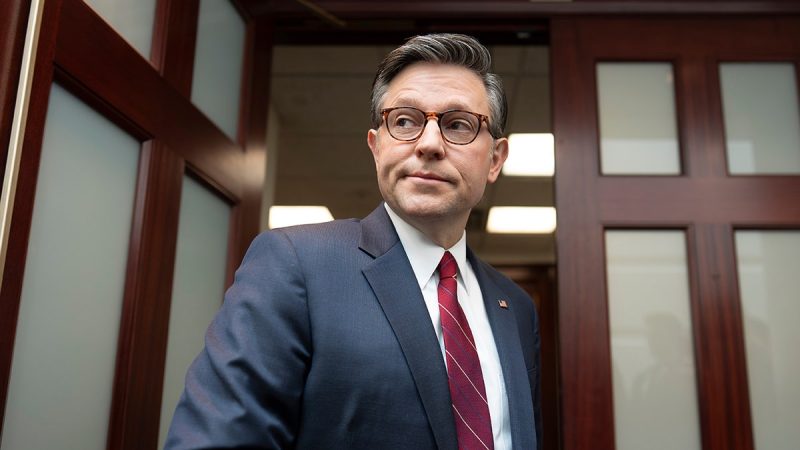
‘Under President Trump, the U.S. is rebuilding strength, restoring deterrence and proving America will not back down. President Trump and Republicans promised peace through strength. The FY26 NDAA delivers it,’ House Speaker Mike Johnson had said in a statement Dec. 7 on the new measures.
Fox News Digital has reached out to the White House for comment.
After a year marked by policy changes and trade uncertainty, experts are calling for cleantech investment to be dominated by artificial intelligence (AI) energy demand in the first quarter of 2026.
The COP30 conference, held in Belém, Brazil, this past November, was marked by cautious optimism and a bias toward action, despite global sustainability commitments seeming to slow.
The shift to net zero is recognized as a complex, regional effort — fossil-rich economies must prioritize carbon capture and lower-emitting fuels like hydrogen and geothermal, while others focus on renewables.
In the US, renewables will maintain momentum in the face of grid overcapacity, with targeted government funding for nuclear and fusion; however, policy headwinds may persist for areas like wind, solar and electric vehicles (EVs).
The energy investment landscape is being fundamentally reshaped by AI energy demand, with Bain & Co. projecting that data centers will consume 9 percent of US electricity by 2030.
Analysts are eyeing this trend, with CFRA Research placing “buy” ratings on many companies held in utilities exchange-traded funds. It notes that some benefit from power agreements for AI-linked data centers.
The American Clean Power Association projects that 2025 will set a full-year record for combined clean energy deployments, despite US policy headwinds that sparked concerns about a sector contraction at the start of the year. Solar and storage capacity made up around 85 percent of new power capacity added to the US electricity grid from January to September 2025, according to a report from the Solar Energy Industries Association and Wood Mackenzie.
A separate analysis by energy think tank Ember reveals that global solar and wind power generation surpassed electricity demand in the first half of this year, generating more power than coal for the first time.
The report also show solar generation grew by a record 31 percent in H1, and wind by 7.7 percent.
The US Energy Information Administration now forecasts that renewables will climb to about 27 percent of US energy generation by 2026, up from 23 percent in 2024.
Meanwhile, startups are racing to make infrastructure smarter and faster to build with the help of AI.
Emerald AI, which uses smart software to manage a cleaner, more flexible grid and ease data center strain, announced its first commercial deployment alongside US$18 million in new seed funding, while Infravision, a company that uses drones to string transmission lines more efficiently, raised US$91 million in a Series B round to scale globally.
AI is also accelerating cleantech breakthroughs, as highlighted by the CleanAI Initiative’s report on AI’s growing role in climate solutions. It shows energy and power technologies garnered more than half of total clean AI investments.
The sector is seen as a critical, multi-layered investment opportunity tied to sustainability and technology leadership in multitrillion-dollar markets; however, key challenges to its growth include the high energy consumption of AI technologies themselves and a lack of combined expertise in both AI and climate science.
Billions in private investment have helped sustain the cleantech sector.
Experts Jason Bordoff and Jack Andreasen Cavanaugh argue that corporate funding will help boost energy transition, citing power purchase agreements and other financial commitments by Big Tech companies such as Alphabet (NASDAQ:GOOGL), Meta Platforms (NASDAQ:META), Microsoft (NASDAQ:MSFT) and Amazon (NASDAQ:AMZN).
NextEra Energy’s (NYSE:NEE) landmark Q4 deals with Alphabet and Meta to power their AI data centers are prime examples of this trend. The Florida-based company will supply clean energy capacity through 11 power purchase and two energy storage deals, with projects expected to become operational between 2026 and 2028. NextEra is also collaborating with Google Cloud to develop three US data center campuses.
However, this transformative period carries significant risks: if the AI boom proves to be a bubble that bursts, energy investment could swiftly vanish, leading to billions in stranded assets.
As China solidifies its dominance in clean energy manufacturing, the question remains whether the US administration’s efforts to expand nuclear and geothermal power can successfully challenge China’s current leadership, as Beijing also accelerates its own nuclear buildout and eyes global reactor exports.
Nuclear and geothermal are gaining traction as promising solutions for AI and data center reliability in 2026, attracting enterprise and policy support as other clean energy initiatives and incentives are pulled back.
The Department of Energy formally released its Fusion Science and Technology Roadmap in Q4, outlining a strategy to accelerate commercial fusion by the mid-2030s. Separately, the department announced it will award up to US$800 million in cost-shared funding to advance small modular reactor projects.
Startups are accelerating too, with Antares raising US$96 million for mid-2026 microreactor tests, while Radiant Nuclear is planning a US$280 million factory in Tennessee targeting 2028 deliveries. Under the leadership of CEO Bob Mumgaard, Commonwealth Fusion Systems is transitioning fusion energy from the realm of research to practical power generation. The company is currently building sites for its commercial fusion plants and is utilizing a partnership with Google DeepMind, focused on AI, to speed up the development of its fusion technology.
Geothermal is scaling, too, with some investors turning their attention to even more ambitious high-temperature projects. Mazama Energy, a startup backed by billionaire businessman Vinod Khosla, is developing a geothermal project at Newberry, one of the largest and most active volcanoes. If successful, this could be a top global geothermal site, supplying electricity to local homes and businesses starting next year.
Endeavors like these are viewed by enthusiasts as a potential catalyst for a new era of geothermal power.
“Geothermal has been mostly inconsequential,” Khosla told the Washington Post.
“To do consequential geothermal that matters at the scale of tens or hundreds of gigawatts for the country, and many times that globally, you really need to solve these high temperatures.”
Another notable example is Zanskar Geothermal and Minerals, which precisely located a deep geothermal reservoir using AI, effectively lowering the exploration and drilling costs of its Big Blind geothermal system. The company is seeking permits to develop Big Blind, aiming to supply power by the end of the decade.
Looking ahead, robotaxis are gaining traction in the EV market, with growing fleets operating in multiple cities.
Alphabet’s Waymo is the most aggressive company in this space, currently offering driverless rides in five cities with plans to expand in 2026. Other key players are actively engaged in various testing stages.
Both Uber Technologies (NYSE:UBER) and Lyft (NASDAQ:LYFT) are incorporating Waymo and other robotaxi services into their platforms, and Uber is adding robotaxis to its platform in Dallas, Texas, through a partnership with Avride, using autonomous Hyundai (KRX:005380,OTC Pink:HYMTF) Ioniq 5s that will initially include a safety operator.
Amazon’s self-driving robotaxi subsidiary, Zoox, expects to start charging passengers for rides in Las Vegas in early 2026, with paid rides in the San Francisco Bay Area coming later next year; however, the move depends on obtaining federal regulatory and state approvals. Tesla (NASDAQ:TSLA), led by CEO Elon Musk, is operating smaller, monitored robotaxi fleets in Austin and San Francisco, with Phoenix anticipated to be the next market for a major expansion.
Meanwhile, self-driving truck startup Waabi, a Canadian company with backing from Uber and NVIDIA (NASDAQ:NVDA), launched its new autonomous truck developed with Volvo (STO:VOLV-A,OTC Pink:VLVCY).
As the cleantech market navigates this transformative period, its long-term success will hinge on strategic investments that successfully balance immense AI energy demands with the imperative of avoiding a stranded-asset bubble.
Sector participants will also need to track country-level developments. In the US, Senator Ruben Gallego’s (D-Ariz.) energy plan prioritizes affordability over climate primacy, calling for reinstated clean tax credits, small modular reactor R&D funding, transmission exemptions and zero-carbon sources alongside oil/gas with clean timelines.
Meanwhile, Canada’s 2025 budget includes a C$2 billion cleantech fund, and the EU’s Carbon Border Adjustment Mechanism pressures imports, favoring compliant North American projects that blend reliability with decarbonization.
Securities Disclosure: I, Meagen Seatter, hold no direct investment interest in any company mentioned in this article.
IRIS Metals Limited (ASX: IR1, “IRIS” or “the Company”) is pleased to announce it has executed a binding Heads of Agreement (HOA) with Finley Mining Inc for the exclusive right to farm-in to the Finley Basin Tungsten Project (Tungsten Project) located in Granite County, Montana, USA. This strategic farm-in opportunity further expands IRIS’ exposure to critical minerals beyond lithium, positioning the Company in a key tungsten district with historical production potential and untapped high-grade tungsten potential in a jurisdiction primed for revival under U.S. critical minerals policies.
HIGHLIGHTS
‘This binding agreement marks an exciting step for IRIS as we grow and diversify our critical minerals portfolio into tungsten, a vital component for the defense and technology industries. The Finley Basin Project offers significant upside with its prospective geology and location in a mining-friendly jurisdiction. Combined with our existing South Dakota portfolio, this positions IRIS to capitalise on significantly growing demand for US-sourced critical minerals.’
Montana Portfolio Expansion and Development
IRIS is actively evaluating additional critical mineral opportunities to complement its core South Dakota holdings. This farm-in to the Finley Basin Tungsten Project diversifies IRIS’ assets into tungsten, a critical mineral essential for military energetics, alloys, electronics, and renewable energy technologies, with U.S. demand surging amid defense initiatives and clean energy goals, yet vulnerable to geopolitical supply disruptions.
The expansion of IRIS’ mineral portfolio to tungsten was measured in approach with a number of projects reviewed and compared. The Company selected the Finley Basin Project due to its high-grade characteristics when compared other tungsten occurrences in the US2, historical exploration results, favourable jurisdiction, potential for expansion of known mineralisation, local milling capabilities, and reasonable proximity to the Company’s South Dakota operations.
IRIS’ primary focus remains on advancing its South Dakota lithium and rubidium projects toward near- term development under its “Hub & Spoke” strategy, which emphasises centralized processing across multiple sites.
Recent expansions, including the September 2025 acquisition of the Ingersoll Project from Rapid Critical Metals have significantly grown IRIS’ Black Hills footprint and private land holdings. IRIS is rapidly expanding mineral resources and progressing studies to support a multi-mine production model, with economic analysis targeted for 2026.
This strategic diversification importantly aligns with broader U.S. incentives for domestically sourced critical minerals and supports resilient supply chains under frameworks such as the Australia-U.S. Climate, Critical Minerals and Clean Energy Transformation Compact.
Click here for the full ASX Release
InMed Pharmaceuticals Inc. (NASDAQ: INM) (‘InMed’ or the ‘Company’), a pharmaceutical company focused on developing a pipeline of proprietary small molecule drug candidates for diseases with high unmet medical needs, today confirmed that, at its annual general and special meeting of shareholders held on December 17, 2025 (the ‘Meeting’), the matters put forward before shareholders for consideration and approval as set out in InMed’s notice of meeting and management information circular, dated November 3, 2025, were voted upon by the shareholders. A total of 993,491 common shares of the Company, representing approximately 35.43% of the Company’s 2,804,186 issued and outstanding common shares, were represented in person or by proxy at the Meeting.
Results of the vote for the election of the board of directors (the ‘Board‘) at the Meeting are set out as follows:
| Director | Votes For | Withheld Votes | ||
| Number | Percentage | Number | Percentage | |
| Eric A. Adams | 125,352 | 82.03% | 27,469 | 17.98% |
| Andrew Hull | 125,315 | 82.00% | 27,506 | 18.00% |
| Nicole Lemerond | 125,485 | 82.11% | 27,336 | 17.89% |
| Neil Klompas | 125,444 | 82.09% | 27,377 | 17.91% |
| John Bathery | 125,227 | 81.94% | 27,594 | 18.06% |
In addition, shareholders voted to approve CBIZ CPAs P.C. as the Company’s auditors for the following year.
Shareholders also voted to approve the potential issuance of 20% or more of the Company’s common shares issued and outstanding as of December 13, 2024, pursuant to the Standby Equity Purchase Agreement with YA II PN, Ltd., as amended on June 13, 2025, pursuant to Nasdaq Listing Rules 5635(d) and 5635(b) (the ‘SEPA‘).
InMed filed a report of voting results on SEDAR+ at www.sedarplus.ca on December 17, 2025.
About InMed:
InMed Pharmaceuticals is a pharmaceutical company focused on developing a pipeline of proprietary small molecule drug candidates targeting the CB1/CB2 receptors. InMed’s pipeline consists of three separate programs in the treatment of Alzheimer’s, ocular and dermatological indications. For more information, visit www.inmedpharma.com.
Investor Contact:
Colin Clancy
Vice President, Investor Relations
and Corporate Communications
T: +1 604 416 0999
E: ir@inmedpharma.com
Cautionary Note Regarding Forward-Looking Information:
This news release, and oral statements by the Company and its executive officers and directors, contain ‘forward-looking information’ and ‘forward-looking statements’ (collectively, ‘forward-looking information’) within the meaning of applicable securities laws. Forward-looking statements are frequently, but not always, identified by words such as ‘expects’, ‘anticipates’, ‘believes’, ‘intends’, ‘potential’, ‘possible’, ‘would’ and similar expressions. Such statements, based as they are on current expectations of management, inherently involve numerous risks, uncertainties and assumptions, known and unknown, many of which are beyond our control. Forward-looking information is based on management’s current expectations and beliefs and is subject to a number of risks and uncertainties that could cause actual results to differ materially from those described in the forward-looking statements. Without limiting the foregoing, forward-looking information includes, but is not limited to, statements about H.R. 5371, the ‘Continuing Appropriations, Agriculture, Legislative Branch, Military Construction and Veterans Affairs, and Extensions Act, 2026’ (the ‘Act‘), the impact of the Act on BayMedica Inc., any potential modifications to the Act and/or the timing thereof and the alternative options available to BayMedica and the Company, statements about developing a pipeline of proprietary small molecule drug candidates for diseases with high unmet medical needs, and statements about the potential issuance of common shares pursuant to the SEPA.
Additionally, there are known and unknown risk factors which could cause InMed’s actual results, performance, or achievements to be materially different from any future results, performance or achievements expressed or implied by the forward-looking information contained herein. A complete discussion of the risks and uncertainties facing InMed’s business is disclosed in InMed’s Annual Report on Form 10-K, and its Quarterly Reports on Form 10-Q, Current Reports on Form 8-K and any other documents filed or furnished with the Securities and Exchange Commission available on www.sec.gov.
All forward-looking information herein is qualified in its entirety by this cautionary statement, and InMed disclaims any obligation to revise or update any such forward-looking information or to publicly announce the result of any revisions to any of the forward-looking information contained herein to reflect future results, events or developments, except as required by law.
To view the source version of this press release, please visit https://www.newsfilecorp.com/release/278446
News Provided by Newsfile via QuoteMedia
Uranium prices stayed fairly steady in 2025, but experts agree its long-term outlook is compelling,
Demand picked up from reactor restarts, new nuclear construction projects and growing interest in small modular reactors. Meanwhile, supply constraints continued as miners faced issues ramping up.
Publish date: September 16, 2025
In September, the Trump administration zeroed in on its plan to reduce uranium reliance on Russia.
A report by Bloomberg outlined that Russia still accounts for approximately a quarter of the fuel used in America’s 94 nuclear reactors, which generate roughly 20 percent of the nation’s electricity.
Secretary of Energy Chris Wright said that the Department of Energy was working to reduce that dependence by rebuilding domestic uranium and enrichment supply chains.
The concept of a federal uranium reserve dates back to 2020, when the first Trump administration sought US$150 million to begin direct purchases from US producers, though Congress approved only half the amount.
Supply concerns sharpened after Russia briefly restricted uranium exports to the US in late 2024, underscoring Washington’s exposure to geopolitical risks.
A law signed in May 2024 requires US utilities to phase out Russian uranium by 2028, with future stockpile levels expected to rise in line with new reactor construction, including small modular reactors.
“We’re moving to a place — and we’re not there yet — to no longer use Russian enriched uranium,” Wright said, adding that the US needs significantly more domestic uranium and enrichment capacity.
Publish date: November 6, 2025
China marked a milestone in 2025 by converting thorium into uranium inside a working molten salt reactor.
The experimental thorium molten salt reactor, developed by the Chinese Academy of Sciences’ Shanghai Institute of Applied Physics in the Gobi Desert, is the first in the world to demonstrate stable thorium-based fission.
The reactor has been operating since reaching first criticality in October 2023 and has now produced data confirming the conversion of thorium-232 into uranium-233, a fissile material capable of sustaining a nuclear chain reaction.
Unlike conventional reactors that use solid uranium fuel rods, the system relies on liquid fuel dissolved in molten fluoride salt, allowing continuous refueling and stable heat generation without shutting down operations.
Publish date: August 6, 2025
In August, Uranium Energy’s (NYSEAMERICAN:UEC) Sweetwater uranium complex in Wyoming was designated for expedited permitting under the Trump administration’s FAST-41 initiative. The initiative is part of a broader strategy to revitalize the US nuclear fuel supply chain and reduce reliance on imports from geopolitical rivals.
The Sweetwater complex, located in Wyoming’s Great Divide Basin, is anchored by a fully licensed conventional uranium mill with a capacity of 3,000 metric tons per day and annual output of 4.1 million pounds.
The site previously included several permitted mines — Sweetwater (Red Desert), Big Eagle and Jackpot (Green Mountain) — and will now be evaluated for in-situ recovery mining, a lower-impact extraction technique.
The new permitting push will allow the company to modify existing approvals to incorporate in-situ recovery capabilities both within and beyond the current mine boundary, including on adjacent federal lands.
Sweetwater is the second uranium project to receive fast-track treatment under the policy, following Anfield Energy’s (TSXV:AEC,NASDAQ:AEC) Velvet-Wood project in Utah, which received the status in May.
Publish date: February 28, 2025
In February, Denison Mines (TSX:DML,NYSEAMERICAN:DNN) announced that the Canadian Nuclear Safety Commission (CNSC) had scheduled public hearings for its Wheeler River uranium project in Saskatchewan.
The hearings were scheduled for October 8 and December 8 to 12, and according to the company would represent the final stage in the federal environmental assessment process. Denison holds an effective 95 percent interest in Wheeler River, the largest undeveloped uranium project in the Eastern Athabasca Basin. If approved, the company expects to begin site preparation and construction for its Phoenix in-situ recovery uranium project in early 2026.
In its Q3 report, released on November 6, Denison said the first part of the hearing was complete, and that it was expecting a decision from the CNSC in early 2026 after part two of the hearing.
Publish date: October 2, 2025
Possibly the biggest uranium news in Australia in 2025 was Western Australia’s move to consider lifting its ban on new uranium licenses. In October, ahead of an energy-focused trade mission to China and Japan, Premier Roger Cook signaled the policy might be under review as part of broader strategic development considerations.
China, Western Australia’s largest trading partner, accounts for more than half of the state’s exports.
While the state’s three existing uranium mines continue to operate under previously approved permits, no new developments have been allowed since the ban was put in place in 2017. Cook emphasized that Western Australia intends to respect legal mining leases, while exploring future opportunities.
He also stressed that any change to the uranium policy would likely depend on a “significant shift” in global markets, while the state continues to monitor existing permit holders and potential future projects.
Securities Disclosure: I, Gabrielle de la Cruz, hold no direct investment interest in any company mentioned in this article.