Lithium Universe (LU7:AU) has announced Market Presentation
Download the PDF here.
This post appeared first on investingnews.com

Lithium Universe (LU7:AU) has announced Market Presentation
Download the PDF here.
Lithium Universe (LU7:AU) has announced Acquisition of Solar Panel Recycling Technology
Download the PDF here.
Highlights
– Engagement in Washington D.C. is a critical step in positioning RML as a trusted partner in the U.S. critical minerals supply chain
– Resolution to consider applying for U.S. Department of Defense (DOD) funding to expedite Horse Heaven Project in Idaho
– Neighbouring Perpetua Resources (PPTA.NAS) was fast-tracked for development in April 2025, and received up to US$74 million in DOD funding, highlighting strong U.S. Government commitment and support for antimony and other critical metal projects
– By aligning with U.S. Government strategic priorities, RML is actively enhancing its ability to progress Horse Heaven on a faster schedule
– Antimony, Silver, Gold and Tungsten trading at record-high prices
CLEWETT GLOBAL SERVICES APPOINTED TO WORK WITH RESOLUTION TO DEVELOP U.S. GOVERNMENT ENGAGEMENT STRATEGY
The Horse Heaven Project is located directly adjacent to NASDAQ-listed Perpetua Resources’ $2 billion Stibnite Gold and Antimony Project, which recently gained final record of decision approval from the U.S. Forest Service.
Horse Heaven has strong gold, antimony and silver mineralisation in two highly prospective structurally controlled mineralised corridors, and includes past-producing antimony, tungsten and gold mines.
Historical exploration results from Horse Heaven are highly encouraging and indicate similar geological characteristics to the neighbouring Stibnite project.
Given the importance of antimony to the U.S. Government’s critical minerals strategy, Resolution Minerals is excited to develop the Horse Heaven Project and will be actively seeking the support of the U.S. Government to expedite its progress.
Founding Partner of Clewett Global Services, Todd Clewett, is a seasoned external affairs executive with a track record of success in engaging decision makers in Washington D.C. regarding mining and critical minerals projects. Clewett formerly headed up the external affairs function for both Newmont Corporation and Fortescue.
Background
The U.S. government has prioritised domestic and allied sources of key minerals such as antimony, tungsten and gallium recognising their importance to defense applications and renewable technologies.
Until now, the U.S. has relied mainly on China for the supply of many critical metals. Following China’s total ban on exports of these metals to the U.S. in late 2024, a priority of the new Administration is to shore up its own domestic supply chains of these materials.
Fast-41 Program
The FAST-41 program, established by Title 41 of the Fixing America’s Surface Transportation Act (FAST Act), is a program designed to improve the timeliness, predictability, and transparency of the federal environmental review and permitting process.
FAST-41 is designed to streamline and expedite the permitting process for infrastructure and mining projects deemed nationally significant. FAST-41 can offer benefits to project developers, including increased predictability, transparency and faster decision-making.
Some projects currently covered under FAST-41 include:
– Perpetua Resources’ (PPTA.NAS) Stibnite Gold Project in Idaho
– Stillwater Palladium & Platinum Project in Montana
– Jindalee Resources’ (ASX:JLL) McDermitt Lithium Project in Oregon
– BPH and RIO’s Resolution Copper Project in Arizona
– South32’s (ASX:S32) Hermosa Critical Minerals Project in Arizona
Resolution Minerals’ efforts to participate in the FAST-41 program follow the precedent set in April this year by next-door neighbour, NASDAQ-listed Perpetua Resources (PPTA.NAS), whose Stibnite Gold Project in Idaho became the first mining project accepted under FAST-41, and by ASX-listed Jindalee Lithium Limited (ASX:JLL), whose McDermitt Lithium Project in Oregon was also successfully fasttracked under FAST-41 in April.
2025 Budget Reconciliation Bill (‘Big Beautiful Bill’)
The proposed 2025 Budget Reconciliation Bill includes US$2.5 billion to support U.S. production of critical minerals via the National Defense Stockpile. In addition, there is US$500 million allocated to the Department of Defense Credit Program for loans, loan guarantees, and technical assistance aimed at developing reliable sources of critical minerals – both within the U.S. and among key international allies.
Congress is expected to pass this bill (in some form) by the end of July 2025. Resolution has commenced plans to pursue all its available options to apply for funding that may become available upon passing of this proposed bill.
Resolution is considering opportunities under the U.S. Department of Defense’s Title III and Industrial Base Analysis and Sustainment (IBAS) programs, which support the development of reliable and resilient supply chains for critical minerals.
RML’s Executive Director, Aharon Zaetz commented:
‘We are extremely honoured for Todd Clewett to want to work with us. We feel very excited that he shares the enthusiasm for the Horse Heaven project and sees the massive potential here. Todd’s experience in working with governments to develop mining projects will be an invaluable asset to RML.
Todd’s experience, knowledge and network in the White House provides him with an extremely rare and unique skillset that RML shareholders are extremely privileged to benefit from.
About Resolution Minerals Ltd:
Resolution Minerals Ltd (ASX:RML) is a mineral exploration company engaged in the acquisition, exploration and development of precious and battery metals – such as antimony, gold, copper, and uranium.
Resolution Minerals Ltd Listed on the ASX in 2017 and has a broad portfolio of assets, such as the Drake East Antimony-Gold Project in north-eastern NSW and George Project prospective for silica sand and uranium.
Source:
Resolution Minerals Ltd
Contact:
Aharon Zaetz
Executive Director
Resolution Minerals Ltd
M: +61 424 743 098
ari@resolutionminerals.com
Jane Morgan
Investor Relations
Jane Morgan Management
M: +61 405 555 618
jm@janemorganmanagement.com.au
News Provided by ABN Newswire via QuoteMedia
Highlights
– Agreement to acquire global rights photovoltaic (PV) solar panel recycling technology
– ‘Microwave Joule Heating Technology’ (MJHT) from Macquarie University
– Utilises microwave technology to selectively heat and delaminate PV cells
– 60-78 million tonnes of waste photovoltaic (PV) modules cumulated by 2050
– Today only 15% of waste solar cells are recycled worldwide
– Most end up in land fill as valuable waste
– Hard to recycle, high temperature furnace, toxic chemicals, low recovery
– MJHT and Delamination enables selective separation of materials – higher recoveries
– To investigate further recovery of silver, silicon, gallium and indium
– Binding commitments received to raise $1.7 million via placement to existing and new sophisticated and professional investors
The rights will be secured via an exclusive licensing agreement (‘Licensing Agreement’) with Macquarie University (‘MQU’), held through an Australian-incorporated holding company, New Age Minerals Pty Ltd (‘NAM’). The key terms of the Licensing Agreement are set out in Schedule 1*. The transaction will be effected by LU7 acquiring 100% of the issued share capital of NAM (‘Proposed Transaction’).
The basis of the technology platform utilises microwave technology to selectively heat silicon thereby softening the EVA encapsulant in solar panels, enabling easy delamination and potential recovery of valuable materials at room temperature. This approach avoids the need for extreme heat (1400degC) typically required for separating materials like glass and silicon as well as the use of costly hazardous chemicals in traditional processes. Delamination enables selective separation of materials without the need for mechanical crushing, whereas traditional crushing methods often result in cross-contaminated material and lower recovery rates.
A report published by the International Energy Agency Photovoltaic Power Systems Programme1 projected that global waste PV modules will amount to 1.7-8.0 million tonnes cumulatively by 2030 and 60-78 million tonnes cumulatively by 2050. By 2035, Australia is expected to accumulate 1 million tonnes of solar panel waste worth over A$1 billion, while the global CIGS (Copper, Indium, Gallium, Selenide) solar cell market is projected to grow to US$12.23 billion by 2032.
Currently, only 15% of used PV cells are recycled, with the rest accumulating in landfills.
This low recycling rate is due to complex processes, high-temperature furnaces, toxic chemicals, and poor recovery yields. The Technology, developed by MQU, enhances the extraction of valuable metals such as silver, silicon, gallium, and indium from discarded PV panels using microwave and delaminating techniques. The breakthrough technology offers a promising new approach for enhanced recovery of valuable metals like Silver, Silicon, Gallium, and Indium. The Company plans to initiate further research and development in this area.
THE PROBLEM TODAY
The world’s renewable energy transition is moving fast, with large-scale PV solar panels playing a central role in national energy strategies. The global solar cell market is projected to hit US$39.81 billion by 2037, growing at a compound annual growth rate (CAGR) of around 8.2%.
Approximately 37% of Australian households have installed solar panels. This represents over 4 million homes and small businesses with solar power systems. The Clean Energy Council reports that 12.4% of Australia’s electricity generation in 2024 came from rooftop solar.
However, as these panels approach the end of their 25-30-year lifespan, the industry faces a growing challenge: managing solar panel waste and recovering valuable materials. A report published by International Energy Agency Photovoltaic Power Systems Programme (IEA PVPS) Task12 and the International Renewable Energy Agency (IRENA) in 2016 projected world’s waste PV modules globally to amount to 1,7-8,0 million tonnes cumulatively by 2030 and to 60-78 million tonnes cumulatively by 2050. By 2035, Australia alone is expected to accumulate 1 million tonnes of end-of-life solar panels, with a total material value of over $1 billion. By 2045, Australia could be looking at 34.6 GW of serviceable panels that will need to be recycled or repurposed, equivalent to the total installed solar capacity in the country as of August 2024.
LOW RECYCLING RATES
The global recycling rate for PV solar panels is around 15%, driven by several challenges. The recycling process is complex, requiring high temperatures and toxic chemicals, making it costly and energy intensive. Economic incentives are limited as the recovery of valuable materials like silicon does not provide sufficient financial returns. However, if recycling technologies can effectively attract and recover critical materials like silver, silicon, gallium, and indium, the financial viability of recycling improves, driving higher recycling rates.
Additionally, the lack of recycling infrastructure and the diverse materials in panels further complicate efficient separation, but advancements in technology are addressing these issues.
When waste PV cells aren’t recycled, they often end up in landfills, causing numerous environmental problems.
Panels can contain harmful materials like cadmium and lead, which may leak into the ground and water, posing risks to both ecosystems and human health. Valuable metals like silver, silicon, gallium, and indium are lost, adding to the strain on natural resources. As more solar panels reach the end of their life, landfills fill up, and the energy stored in these materials is wasted. Recycling can help solve these issues by recovering critical materials and cutting down on pollution.
POTENTIAL GROWTH OF PV RECYCLING INDUSTRY
The nascent PV solar panel recycling industry is experiencing rapid growth due to the increasing demand for critical metals such as silicon, silver, and indium, which hold substantial economic value. As the market for endof-life (EoL) solar panels expands, driven by both economic opportunities and environmental needs, the recovery of these materials is becoming a lucrative business. The market for recyclable materials from EoL solar panels is projected to reach over $2.7 billion by 2030 and could approach $80 billion by 2050, according to Rystad Energy. This growth is further fuelled by the fact that recovering materials from used panels can offset the need for costly and environmentally damaging virgin material extraction. Additionally, recycling helps secure a domestic supply of critical metals, reducing reliance on volatile foreign sources. Advancements in recycling technology, particularly in recovering high-value materials like silicon and silver, are making these processes more economically viable and environmentally necessary. Research has demonstrated that up to 98% of silver and nearly all of copper, lead, and other valuable metals can be recovered efficiently, enhancing the profitability of the recycling industry. As technology improves, the recycling of PV panels will play a crucial role in supporting the transition to a circular economy and sustainable energy future.
CRITICAL METALS IN PV CELLS
As the demand for critical minerals continues to rise with the global shift to clean energy, the need to recover valuable materials from these panels becomes increasingly urgent. Solar panels are made up of 95% recyclable materials, including silver, aluminum, silicon, copper, indium, and gallium-all of which are vital to global clean energy supply chains. Rare metals like gallium are essential for solar fuel cells, semiconductor chips, and other high-tech applications, making their recovery from e-waste a key priority.
COMMENTS: EXECUTIVE CHAIRMAN, IGGY TAN
‘Now that we have completed our lithium refinery DFS and secured all necessary components-including land and partnerships-we are positioned and ready for a lithium price recovery. We are confident in our counter-cyclical strategy and firmly believe that LU7 will benefit significantly when the lithium market rebounds. While awaiting this recovery, we have been presented with an exciting opportunity to acquire a cutting-edge photovoltaic recycling technology’.
‘I am thrilled about the acquisition of Macquarie University’s Microwave Joule Heating Technology (MJHT) and the opportunity to potentially extract critical metals such as silver from solar panel recycling.
The need for effective PV recycling has never been greater, with only 15% of panels currently being recycled. The mass accumulation of solar panel waste in landfills is a growing problem, as valuable critical metals like silver, silicon, gallium, and indium are left behind, contributing to both resource depletion and environmental harm. Microwave technology offers a promising solution to these challenges, enabling higher recovery rates and more sustainable recycling processes. We firmly believe that this technology represents the future of solar panel waste management. We are eager to collaborate with the Macquarie team to develop a more efficient and cost-effective recycling process’.
*To view the full release with tables and figures, please visit:
https://abnnewswire.net/lnk/A0938OHA
To view the Market Presentation, please visit:
https://www.abnnewswire.net/lnk/JJ10ITOI
About Lithium Universe Ltd:
Lithium Universe Ltd (ASX:LU7) (FRA:KU00) (OTCMKTS:LUVSF), headed by industry trail blazer, Iggy Tan, and the Lithium Universe team has a proven track record of fast-tracking lithium projects, demonstrated by the successful development of the Mt Cattlin spodumene project for Galaxy Resources Limited.
Instead of exploring for the sake of exploration, Lithium Universe’s mission is to quickly obtain a resource and construct a spodumene-producing mine in Quebec, Canada. Unlike many other Lithium exploration companies, Lithium Universe possesses the essential expertise and skills to develop and construct profitable projects.
Source:
Lithium Universe Ltd
Contact:
Alex Hanly
Chief Executive Officer
Lithium Universe Limited
Tel: +61 448 418 725
Email: info@lithiumuniverse.com
Iggy Tan
Chairman
Lithium Universe Limited
Email: info@lithiumuniverse.com
News Provided by ABN Newswire via QuoteMedia
The U3O8 spot price climbed sharply to kick off the week, hitting US$76.21 per pound.
Its Monday (June 16) rise is a 9.7 percent gain from the previous week’s close of US$69.47, and came after news that the Sprott Physical Uranium Trust (TSX:U.U,OTCQX:SRUUF) had penned a US$100 million bought-deal financing.
The financing was upsized to US$200 million the same day ‘as a result of strong investor demand.’
Sprott (TSX:SII,NYSE:SII), acting on behalf of the trust, confirmed the agreement, which will see Canaccord Genuity Group (TSX:CF,OTC Pink:CCORF) purchase 11,600,000 units of the trust at a price of US$17.25 each.
The offering, expected to close by June 20 pending regulatory approvals, will fund purchases of uranium oxide concentrates and uranium hexafluoride, in line with the trust’s mandate to hold physical uranium.
The news sparked a rally in uranium stocks on Monday.
On the TSX, major miner Cameco (TSX:CCO,NYSE:CCJ) rose just over 6.5 percent, while NexGen Energy (TSX:NXE,NYSE:NXE) was up 8 percent. Uranium Energy (NYSEAMERICAN:UEC) was up 12.64 percent in the US, and Denison Mines (TSX:DML,NYSEAMERICAN:DNN) jumped 14.8 percent on the TSX.
In Australia, Deep Yellow (ASX:DYLASX:DYL,OTCQX:DYLLF) surged more than 21 percent, while Boss Energy (ASX:BOE,OTCQX:BQSSF) jumped nearly 18 percent and Paladin Energy (ASX:PDN,OTCQX:PALAF) climbed over 15 percent amid investor optimism that the fresh capital injection could tighten the uranium spot market.
The Sprott trust, launched in 2021 and often referred to as SPUT, has been a key player in physically sequestering uranium from global markets, helping to reduce available supply and influence spot pricing trends.
After reaching a 14 year high of US$82 in early 2024, uranium prices trended downward, falling as low as US$64.30 this year. Despite the consolidation phase, experts believe the long-term outlook is positive.
The deal marks one of the most significant capital raises for uranium buying in 2025, and reflects growing institutional confidence in the long-term viability of nuclear energy as part of the clean energy transition.
SPUT’s move also comes amid momentum in US uranium policy. In late May, US President Donald Trump signed a series of executive orders aimed at revitalizing America’s nuclear energy sector. The orders are intended to ramp up domestic uranium production to meet growing power demands, especially from artificial intelligence data centers.
Tech giants like Microsoft (NASDAQ:MSFT), Google and Amazon (NASDAQ:AMZN) have all done nuclear power deals for data centers, honing in on nuclear as a viable solution for their zero-carbon baseload energy needs.
For now, Sprott’s buying spree offers a test of how tight the uranium market really is. With settlement set for later this week, attention will turn to whether its uranium purchases trigger further positive price activity.
Securities Disclosure: I, Giann Liguid, hold no direct investment interest in any company mentioned in this article.

Critical One Energy (CSE:CRTL,OTCQB:MMTLF), formerly Madison Metals, announced on June 12 that it has entered into an agreement with uranium-focused Dark Star Minerals (CSE:BATT) to sell 100 percent of its interests in the Khan West and Cobra North uranium projects in Namibia’s Erongo uranium province.
The acquisition will transfer Critical One’s Namibian uranium assets — specifically the Khan West and Cobra North projects — through staged cash payments and share issuances over a two year period.
The move signals a strategic shift by Critical One toward its Howells Lake antimony-gold project in Ontario, Canada, as it aims to capitalize on growing demand for critical minerals.
The Khan West and Cobra North projects are situated in a well-established Namibian uranium-mining district near the Rössing uranium mine, one of the world’s largest uranium-producing properties.
Cobra North includes two exclusive prospecting licenses and has a historical NI 43-101 inferred resource estimate of 15.6 million metric tons grading 260 parts per million U3O8 for a contained metal total of 9 million pounds of U3O8.
Dark Star said it won’t be treating the historical resource as current.
Similarly, Khan West encompasses a mining license and an exclusive prospecting license. Geological characteristics of the Khan West site reportedly mirror those of Rössing, featuring uranium-anomalous granites within a prominent structural deformation corridor. The mining license includes a license to extract uranium.
For Dark Star, the deal represents a bolstering of its uranium portfolio. In early April, the company announced plans to acquire the Bleasdell Lake uranium project in Northern Saskatchewan, Canada, which has historical uranium resources.
Later in the month, the company entered into a definitive mineral purchase agreement for the property.
Critical One’s pivot away from uranium is part of a broader refocus on critical minerals with promising market dynamics.
The Howells Lake antimony-gold project offers exposure to antimony, an increasingly valuable critical mineral that is tied to clean energy and advanced technology sectors, including the defense industry.
Duane Parnham, executive chair and CEO, emphasized the project’s potential for “higher growth potential and improved returns,” noting the added gold exploration upside amid record-high gold prices.
“The project provides gold exploration upside in a period when the yellow metal’s value is reaching all-time market highs,” Parnham said. To support its refocused strategy, Critical One simultaneously announced a non-brokered private placement financing, saying it is targeting gross proceeds of up to C$1 million.
Parnham highlighted insider participation in the financing, stating that the “ongoing support underscores management’s confidence in the value and potential of the Howells Lake antimony-gold project.”
Proceeds will be used for data processing, geophysics, permitting, drilling and other activities related to advancing Howells Lake, as well as strengthening the company’s financial position and supporting general working capital.
Securities Disclosure: I, Giann Liguid, hold no direct investment interest in any company mentioned in this article.
Greenvale Energy (GRV:AU) has announced Significant Uranium anomalies identified across the NT
Download the PDF here.
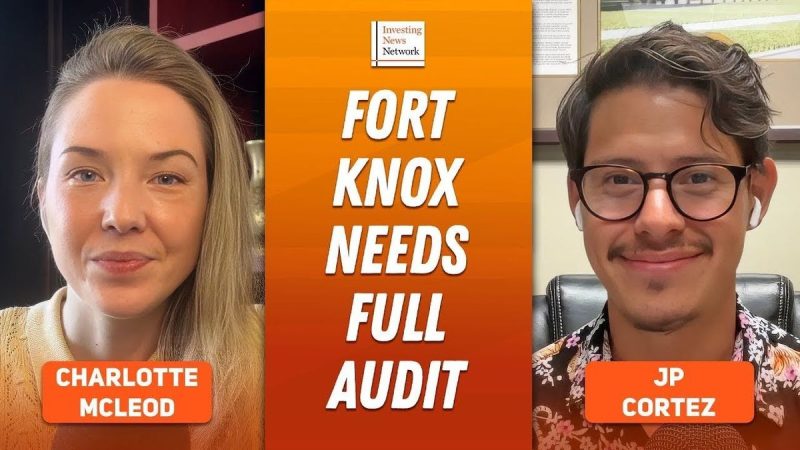
Jp Cortez, executive director at the Sound Money Defense League, breaks down what to know about the Gold Reserve Transparency Act, a measure to audit the gold in Fort Knox and other places where America’s gold is purportedly stored.
‘A space on X will not suffice, and is not a substitute for a true assay, a true audit of every single transaction that that gold was involved in,’ he said.
Securities Disclosure: I, Charlotte McLeod, hold no direct investment interest in any company mentioned in this article.

According to market intelligence firm Newzoo, global gaming revenue came in at US$177.9 billion in 2024, with mobile gaming accounting for more than half of that amount at US$97.6 billion.
The firm states that the mobile gaming market has reached maturity but still achieved higher growth than the console and PC segments, with revenue up by 2.8 percent globally last year. The regions driving that growth are North America and Europe, where markets rebounded due to big releases and diversified revenue streams.
Mobile games are typically accessed through three core operating systems: Apple’s (NASDAQ:AAPL) iOS, Microsoft’s (NASDAQ:MSFT) Windows and Alphabet’s (NASDAQ:GOOGL) Android. Notably, the iOS App Store generated nearly 37 percent of its revenue from mobile gaming apps in 2024, totaling US$3.83 billion. However, figures show that most mobile games on the market today are developed for Android, representing 75 percent of total mobile game downloads.
For investors interested in getting exposure to mobile gaming as the market gains momentum, here’s a look at the top 10 mobile gaming stocks by market cap. All data and figures were accurate as of June 2, 2025.
Market cap: US$60.97 billion
Roblox is the company behind the well-known game platform of the same name. First launched on PC in 2006, in recent years Roblox has become the most popular free-to-play online gaming platform, particularly amongst children and teenagers.
The company draws a majority of its revenues by selling virtual currency known as Robux for in-app purchases.
According to the company’s Q1 2025 report, Roblox garnered over 97.8 million daily active users in the first quarter of 2025, up 26 percent from the same period last year. The platform’s most popular games are role-playing games Brookhaven and Blox Fruits.
Market cap: US$40.15 billion
New York-headquartered Take-Two Interactive Software is a holding company that owns several significant gaming labels that develop and publish video games for Xbox, PlayStation and Nintendo consoles as well as PCs and mobile devices. Some of Take-Two’s most popular game series are widely recognized around the world, including Grand Theft Auto (GTA), Red Dead Redemption and Borderlands.
The majority of Take-Two’s mobile games are published by Zynga, a developer of free-to-play games that Take-Two acquired in 2022 for US$12.7 billion. The publisher’s properties include 2009 hits FarmVille and Words with Friends.
Last year, Zynga’s highest grossing game according to Statista was Empires & Puzzles: Dragon Dawn with approximately US$147 million in revenue, and its most-downloaded title was CSR 2 Realistic Drag Racing.
While Rockstar is largely focused on console and PC games, several of its older games were ported to mobile, such as the classic GTA III, GTA San Andreas and GTA The Trilogy Definitive Edition.
Market cap: US$36.6 billion
Electronic Arts (EA) is a leading gaming and esports company with video game offerings across many genres, from sports to action/adventure to role playing to family games. The California-headquartered company owns many well known series, including the Sims, Madden NFL, FIFA, Battlefield, Need for Speed, Dragon Age and Plants vs. Zombies.
EA has increased its focus on the mobile gaming segment in recent years, and in early 2024 announced it would focus on its fully owned mobile games portfolio instead of its licensed games with other brands. Leading up to that, the company merged its mobile and HD franchise teams across EA Sports FC, Madden NFL and The Sims.
In March 2025, EA announced a partnership with games marketing company Flexion, who will help EA publish its mobile games on the Amazon Appstore, Samsung Galaxy Store, Xiaomi’s GetApps and ONE Store.
Market cap: US$25.78 billion
Tencent Holdings is a Chinese conglomerate with significant holdings through a wide array of sectors. Its large gaming segment built through acquisitions and investments has made it the world’s largest gaming company by revenue.
Tencent owns Riot Games, maker of the popular PC game League of Legends, a multiplayer online battle arena game with a monthly active player base of between 117 million to 135 million. The expanding League of Legends franchise also features three mobile games: Wild Rift, Team Fight Tactics and Legends of Runeterra.
The company also released PUBG Mobile based on the PC game PlayerUnknown’s Battlegrounds. The multiplayer battle royale game is available on Android and iOS.
Tencent is now focusing on building up its in-house AAA and console gaming business segment in order to better compete with western gaming companies.
Market cap: US$10.91 billion
San Francisco-based Unity Software develops the core software technology or building video games and interactive experiences. It offers developers a suite of tools for designing and launching 2D and 3D games as well as virtual and augmented reality applications. This includes the ability to create and host large-scale, multi-player games.
Two of the most popular mobile games built on the Unity Software engine are the online multiplayer social deduction game Among Us, developed by game studio Innersloth, and augmented-reality mobile game Pokémon Go, developed and published by Niantic in collaboration with Nintendo Co. (LSE:0K85,TSE:7974) and The Pokémon Company.
Although in its Q1 2025 financials, Unity saw its grow revenue and create revenue drop by 4 percent and 8 percent, respectively, year-over-year, its financial performance still included exceeding the high-end of its revenue guidance by 5 percent, and its adjusted EBITDA by 29 percent.
Market cap: US$1.79 billion
Headquartered in Israel, Playtika Holdings claims to be among the first mobile gaming entertainment companies to offer free-to-play social games on social networks and on mobile platforms. Today, Playtika has a diverse portfolio of game titles accessed by more than 29 million monthly active users last year.
Playtika has built its mobile entertainment platform through eleven strategic acquisitions totaling US$337 million aimed at increasing its breadth of entertainment genres and leveraging its Boost platform to enhance game operations. Playtika’s most recent acquisition was mobile gaming company SuperPlay, which it picked up for US$700 million in late 2024.
In its first quarter of 2025, the company reported a record quarterly revenue of more than US$700 million. This is up 8.4 percent over the same period in the previous year.
Market cap: US$951.33 million
Corsair Gaming is a global powerhouse in the development and manufacturer of high-performance gamer gear, including keyboards, mice, game controllers and headsets.
While the company primarily targets PC gamers, Corsair has moved into the mobile games market in recent years with the launch of its SCUF Nomad, a compact Bluetooth controller designed for competitive gamers with iPhones. The controller expands to fit the user’s phone in the center and work with any games that offer controller support.
Market cap: US$208.84 million
Inspired Entertainment is a gaming technology company that offers content, tech, hardware and services both offline and online gaming, betting and social gaming platforms. This includes digital games across more than 170 websites.
Last year, the company launched a number of online and mobile slot games, including Gold Cash Free Spins and Big Piggy Bank. In January 2025, Inspired announced the release of its online and mobile slot games into the regulated Brazilian market.
Market cap: US$186.86 million
PLAYSTUDIOS develops free-to-play mobile games for its brand partners in the travel, leisure and entertainment sectors. Through its playAWARDS platform, mobile gamers can earn brand offerings as in-game rewards. The platform has a player network of more than 4.2 million gamers and 737 award partners, including brands such as Royal Caribbean International, MGM Grand and Cirque de Soleil.
The company will be offering its social casino games players an opportunity to win trips to the Atlantis Paradise Island resort in the Bahamas, and seats in the second annual US$1 million myVIP World Tournament of Slots, which will take place at the resort in October 2025.
PLAYSTUDIOS’ full year 2025 guidance for net revenue is US$250 million to US$270 million.
Market cap: US$16.24 million
Florida-based Motorsport Games develops and publishes motorsport games, and organizes esports racing competitions and content.
It is officially licensed to develop and publish video games for the FIA World Endurance Championship and the 24 Hours of Le Mans. Motorsport Games’ rFactor 2 is an official racing simulation platform of Formula E, and it powers the F1 Arcade venue chain via a partnership with Kindred Concepts.
In April 2025, Motorsport announced a strategic investment of US$2.5 million led by virtual reality hardware company Pimax Innovation. The two companies plan to combine their offerings to create immersive VR racing sims.
Securities Disclosure: I, Melissa Pistilli, hold no direct investment interest in any company mentioned in this article.
The Trump administration is fast tracking development of Dateline Resources’ (ASX:DTR,OTC Pink:DTREF) Colosseum rare earths project in California as part of its push to boost domestic critical minerals supply.
In a recent interview, Secretary of the Interior Doug Burgum highlighted the project as a priority under the government’s critical minerals strategy, stating that the US has ‘to get back in the game in a serious way around critical minerals.”
For his part, US President Donald Trump has called the project ‘America’s second rare earths mine.” He first announced Colosseum’s approval in an April 21 Truth Social post, listing it as a weekly achievement.
The Colosseum project sits in the Walker Lane Trend in East San Bernardino County, California, only 10 kilometers north of MP Materials’ (NYSE:MP) Mountain Pass mine, the only operating rare earths mine in the US.
Mountain Pass is also the highest-grade rare earths mine in the world.
According to Burgum, the endorsement from the government stems from the US’ push to restart domestic rare earths production and reduce dependence on other countries such as China.
Currently, China remains the biggest rare earths producer by far, producing 270,000 metric tons in 2024. That’s about 70 percent of the total production for the year, which was recorded at 390,000 metric tons.
The ongoing trade war has created tensions between the US and China, raising questions about supply chain security.
Some relief was seen last week — the BBC reported that China has agreed to supply US companies with magnets and rare earths as part of Trump’s deal with Xi Jinping, president of China. In return, the US said it will walk back its threats to revoke the visas of Chinese nationals at US colleges and universities.
Trump addressed the arrangement via a June 11 Truth Social update, stating that he has “always been good” with including Chinese students in colleges and universities.
Dateline has a green light to explore and extract rare earths from Colosseum, as well as gold.
“We have seen growing interest out of the US, particularly after recent milestones at Colosseum,” the Sydney Morning Herald quotes Dateline Managing Director Stephen Baghdadi as saying.
Dateline said in May that it had started the process to uplist to the OTCQB. Should the OTCQB listing go through, the company will still continue to meet its ASX disclosure requirements.
The same month, the company said it had begun preparations for a rare earths-focused drill program at Colosseum, and would complete it alongside a planned gold feasibility study for the site.
Securities Disclosure: I, Gabrielle de la Cruz, hold no direct investment interest in any company mentioned in this article.