C29 Metals (C29:AU) has announced C29 Signs Binding HOA to Drive Growth
Download the PDF here.
C29 Metals (C29:AU) has announced C29 Signs Binding HOA to Drive Growth
Download the PDF here.
Gold trended down this week, dropping to just over US$3,200 per ounce on the first day of May.
While the yellow metal remains historically high after a strong run this year, its price has pulled back from last week’s record-setting level of US$3,500, causing concern for some market participants.
However, many experts agree that this week’s retreat isn’t a reason to worry.
His technical analysis shows that the US$3,100 to US$3,140 area will be important to watch moving forward — in his view, that’s when bullish players should start re-entering the space, boosting the price.
Soloway also outlined gold’s future price potential, saying he sees a potential path to US$7,000. Check out the full interview for more of his thoughts on gold, as well as silver and the US economy.
Eyes are shifting to the US Federal Reserve’s next meeting, set to run from May 6 to 7. It follows initial numbers showing that real GDP contracted by an annual rate of 0.3 percent in Q1.
That’s the first negative reading since 2022, and as the news weighed on the stock market, US President Donald Trump took to social media to suggest the data is an ‘overhang’ from Joe Biden’s term.
Trump has pressured Fed Chair Jerome Powell to cut interest rates sooner than later, but CME Group’s FedWatch tool shows the vast majority of market participants expect rates to stay flat.
Trump advisor Elon Musk also has his eye on the Fed. Speaking to reporters on Wednesday (April 30), he said the US$2.5 billion renovation of the central bank’s headquarters could become a point of inquiry for the Department of Government Efficiency, better known as DOGE.
Calling the cost an ‘eyebrow raiser,’ Musk questioned where the money is being spent. The price of the project was initially set at US$1.9 billion in 2021, but has increased since then.
‘Since at the end of the day, this is all taxpayer money, I think we certainly — we should definitely — look to see if indeed the Federal Reserve is spending $2.5 billion on their interior designer’ — Musk
The US and Ukraine signed a much-anticipated minerals deal on Wednesday, ending months of often-tense negotiations between the two countries. If approved by parliament in Ukraine, the agreement will set up a reconstruction investment fund that will be split 50/50 between each party.
According to Ukrainian officials, the deal is more equitable than previous versions.
The fund will be financed only by new licenses for critical materials, oil and gas; aside from that, Ukraine will not have to pay back wartime aid provided by the US.
While Ukraine had pushed for security guarantees from the US, that component ultimately wasn’t put in place. However, the US may provide new assistance to Ukraine, such as air defense systems.
A total of 55 minerals are reportedly covered in the arrangement, but more can be added in the future if there is consensus between the US and Ukraine. Although the US will get preferential rights to mineral extraction, Ukraine will have the final say on what is mined and where, and will retain subsoil ownership.
The agreement comes on the back of an increasing global focus on critical minerals, many of which are key for new technology and important industries like defense.
It’s worth noting that while Ukraine is home to a wide variety of these commodities, more geological data will be needed to determine commercial viability — for example, there is no up-to-date information on the country’s reserves of rare earths, which are important to the US.
Securities Disclosure: I, Charlotte McLeod, hold no direct investment interest in any company mentioned in this article.
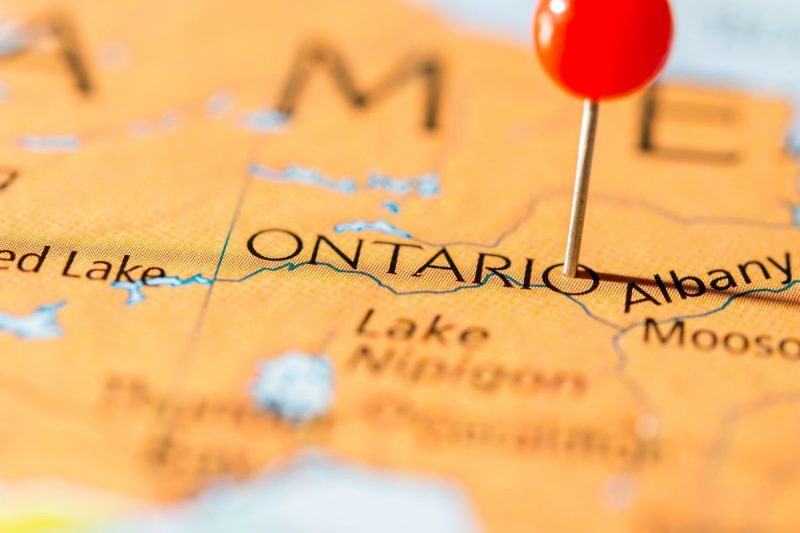
Ontario has introduced legislation aimed at tightening control over the province’s mining and energy sectors by limiting foreign involvement, fast-tracking resource development and scaling back species-at-risk protections.
The Protect Ontario by Unleashing Our Economy Act, 2025, also known as Bill 5, was announced at the Toronto Stock Exchange on April 17 by Premier Doug Ford and Energy and Mines Minister Stephen Lecce.
According to the government, the new bill is designed to “safeguard Ontario’s critical minerals, secure the province’s energy infrastructure, and reduce regulatory bottlenecks that hamper development.”
“With President Trump taking direct aim at our economy, it cannot be business as usual,” Ford declared during the announcement, referring to recent US moves to prioritize domestic supply chains for critical resources.
The proposed law would grant the Ontario government sweeping new powers over the mining sector.
These would include the ability to suspend or revoke mining claims, deny transfers or leases and limit access to Ontario’s Mining Lands Administration System — particularly for entities linked to “hostile foreign regimes.”
It would also allow the government to restrict foreign participation in the province’s energy sector.
“In today’s changing world, we need to be clear-eyed about the risks from those who want to exploit our resource bounty,” Lecce said in an April 25 press release that covers the legislation. “That is why it is essential that Ontario is protecting our critical minerals and energy sector from getting into the wrong hands.”
Kevin Holland, member of provincial parliament for Thunder Bay-Atikokan, added that the measures are especially significant for Northern Ontario, where the economy is deeply tied to resource extraction.
“Ontario is taking important actions to protect our mining and energy assets during this volatile time,” he said.
According to the provincial government, the legislation is partially a response to concerns raised in a 2021 national security report in which Canada’s natural resources are identified as a strategic vulnerability.
However, the proposed legislation has sparked sharp criticism from environmental advocates who warn that Bill 5 undermines Ontario’s Endangered Species Act. It would be replaced with a much narrower Species Conservation Act that redefines what constitutes a species’ habitat.
Under current law, a habitat includes all areas a species needs to live, migrate and reproduce. The new definition reduces this to “a dwelling place, such as a den, nest or other similar place,” plus the immediate surrounding area.
Critics argue that this change all but guarantees habitat loss for vulnerable species.
“The definition of habitat is so narrow that what it means is less habitat than the species has now,” Laura Bowman, a lawyer with the environmental law charity Ecojustice, told CBC. “And less habitat than the species has now, for a species already in decline, virtually ensures extirpation or extinction,” she added
The bill would also eliminate the requirement for recovery strategies once a species is declared at risk — a key mechanism under the current law that sets out steps to restore populations to sustainable levels.
The legislation is part of Ontario’s push to accelerate development in the Ring of Fire, a mineral-rich region in the province’s far north. The Ford government has long touted the area’s potential to supply key inputs like nickel, lithium and chromite for electric vehicles and clean technologies. According to the government, Bill 5 will “cut red tape and streamline approvals” to jumpstart projects that are currently mired in lengthy environmental and consultation processes — often involving Indigenous communities whose territories overlap with planned developments.
Despite the growing need for secure critical minerals supply chains, the decision to pair national security rhetoric with the rollback of environmental protections is likely to ignite political and legal challenges in the months ahead.
Securities Disclosure: I, Giann Liguid, hold no direct investment interest in any company mentioned in this article.
John Rubino, who writes a newsletter on Substack, explains the factors behind gold’s ‘epic run,’ pointing to underlying elements like Basel III and BRICS demand, as well as current events.
He believes gold has the wind at its back, although silver might be the better buy right now.
Securities Disclosure: I, Charlotte McLeod, hold no direct investment interest in any company mentioned in this article.
The world’s oceans are increasingly becoming an important new frontier in the geopolitical and economic race for critical minerals, with countries fast-tracking plans for deep-sea mining.
Meanwhile, the global body tasked with regulating such activities is struggling to keep pace.
As sovereign states ramp up efforts to access seabed resources crucial for clean energy and defense technologies, the International Seabed Authority (ISA) finds itself sidelined — raising alarms among environmentalists and nations alike.
Stoking these tensions, US President Donald Trump signed an executive order earlier this month with the aim of expediting deep-sea mineral extraction in both national and international waters.
The directive, which calls for faster permitting and exploration, bypasses multilateral negotiations at the ISA and uses a 1980 domestic statute — the Deep Seabed Hard Mineral Resources Act — to justify the unilateral action.
The order “establishes the US as a global leader in seabed mineral exploration and development both within and beyond national jurisdiction,’ signaling Washington’s intent to secure independence from Chinese mineral supply chains.
But the move has drawn fierce criticism from multiple fronts.
“The US authorization … violates international law and harms the overall interests of the international community,” said Chinese foreign ministry spokesman Guo Jiakun. Such sentiments echo concerns that unilateral actions could unravel decades of work toward collective seabed governance under the United Nations (UN) Convention on the Law of the Sea.
At the heart of the dispute lies the ISA, the UN agency responsible for regulating mining in international waters.
Though it has issued over 30 exploratory permits, it has yet to finalize rules for commercial extraction. That regulatory vacuum has encouraged countries to approach the issue alone and in accordance with their own different agendas.
In January 2024, Norway became the first country to approve commercial-scale deep-sea mining within its own exclusive economic zone, greenlighting exploration across 280,000 square kilometers — an area larger than the UK.
The move, passed through parliament despite strong domestic and international opposition, is part of the country’s bid to secure metals like cobalt, scandium and lithium for green technologies.
“We will have a relatively long period of exploration and mapping activity to close the knowledge gap on the environmental impact,” Walter Sognnes, co-founder of Loke Marine Minerals, a Norwegian company focused on deep-sea exploration, told the BBC in an interview at the time the news was announced
However, environmentalists argued that the plan undermined Norway’s own standards.
“The Norwegian government always highlighted that they want to implement the highest environmental standards,” said Martin Webeler of the Environmental Justice Foundation.
“That is hypocritical whilst you are throwing away all the scientific advice.”
The Norway Institute of Marine Research also criticized the government’s decision, saying the existing environmental impact assessment was based on limited data and not representative of the vast areas opened for mining. It called for an additional five to 10 years of research before proceeding.
Against that backdrop, Norway reversed course, suspending its deep-sea mining plans at the end of 2024 following mounting political and environmental pressure.
The first licensing round, originally set for 2025, was blocked after the Socialist Left Party threatened to withhold support for the government’s budget unless the initiative was halted.
For its part, India has announced plans to ramp up its presence in the Pacific’s Clarion-Clipperton zone, one of the world’s most mineral-rich deep-sea regions. Although the ISA has already granted India two exploration contracts, the country has opted to hold off on operations as regulations remain in flux.
M. Ravichandran, secretary of the country’s Ministry of Earth Sciences, said the country is seeking to apply to the UN-backed ISA next year to focus on exploring the zone.
Meanwhile, the resource-rich Pacific Islands are emerging as battlegrounds in this high-stakes race.
Kiribati, a small island nation with jurisdiction over 75,000 square kilometers of prospective seabed, is reportedly in talks with China after a previous deal with Canada’s The Metals Company (NASDAQ:TMC) collapsed late last year.
In a statement dated March 17, the Kiribati government called discussions with Chinese ambassador Zhou Limin “an exciting opportunity” to explore its deep-sea resources.
But critics say such moves by smaller nations are often driven by economic desperation and can lead to exploitative outcomes. This tension is familiar in Papua New Guinea, where the failure of the Nautilus Minerals project left environmental damage and financial losses in its wake.
Some Pacific nations are now calling for a global moratorium on seabed mining, citing concerns about the unknown risks to ecosystems and the climate.
The race toward seabed mining is exposing a critical flaw in global governance: fragmentation. The ISA, which was supposed to provide a unified framework, is losing relevance as more countries chart independent courses.
“The harm caused by deep-sea mining isn’t restricted to the ocean floor: it will impact the entire water column, top to bottom,” Jeff Watters, vice president for external affairs at the Ocean Conservancy, told the Guardian.
A study by the Natural History Museum and the UK’s National Oceanography Center analyzing a 1970s test site concludes that some sediment dwellers were able to recover, but larger animals dependent on polymetallic nodules did not return — likely because the nodules, which take millions of years to form, were destroyed.
Despite these warnings, the Metals Company continues to push forward. It has said it plans to mine by the year’s end, pending US government approval, as CEO Gerard Barron remains unfazed by the backlash.
“Here there’s zero flora,” Barron told the BBC in a January 2024 interview. “If we measure the amount of fauna… in the form of biomass, there is around 10g per square metre. That compares with more than 30kg of biomass where the world is pushing more nickel extraction, which is our equatorial rainforests.”
Beyond environmental concerns, the deep-sea mining surge is reshaping geopolitical dynamics. China, which dominates global production and processing of rare earths, has long used its position as leverage in trade disputes. In response to US tariffs, Beijing recently introduced new export controls on rare earths — further intensifying the mineral arms race.
Trump’s executive order makes clear that seabed mining is now viewed as a national security imperative.
“It’s not just drill, baby, drill. It’s mine, baby, mine,” said Secretary of the Interior Doug Burgum at a recent conference. “We will literally be at the mercy of others that are controlling our supply chains,” he warned.
But this approach risks setting a dangerous precedent. If powerful nations begin issuing their own licenses outside multilateral systems, others are likely to follow suit. The result could be a patchwork of conflicting claims and reduced protections, particularly for vulnerable maritime nations.
With the ISA still developing a mining code and more countries rejecting its pace, the world faces a dilemma: how to balance the urgent demand for critical minerals with the equally pressing need to preserve fragile marine ecosystems.
Securities Disclosure: I, Giann Liguid, hold no direct investment interest in any company mentioned in this article.
The Liberal Party of Canada and Prime Minister Mark Carney will form a minority government following their victory in Canada’s national election on Monday (April 28). The Liberals won 168 seats, just shy of the 172 required to form a majority, meaning the Liberal government will have to work with the Bloc Québécois or the NDP, which won 23 and 7 seats, respectively.
The Conservative Party of Canada, led by Pierre Poilievre, won 144 seats. While the CPC was originally expected to win the election, the trade war and sovereignty threats from new US President Donald Trump turned the tide in favor of Carney, who took a firmer stance against Trump. Other election issues included the high cost of living, housing, immigration and crime.
Both parties came into the election with visions for Canada’s economy, which included energy and infrastructure corridors, a commitment to energy production and a focus on resource nationalism.
Statistics Canada released February’s gross domestic product by industry figures on Wednesday (April 30). According to the data, the resource sector’s January gains were largely erased by contractions in February. Oil and gas extraction slipped by 2.8 percent, while mining and quarrying contracted by 2.6 percent during the month. Metal ore mining posted its second month of declines, falling 2.5 percent. On the other hand, non-metallic mineral mining climbed by 2.7 percent, including a 3.5 percent rise in potash mining.
South of the Border, The United States Bureau of Labor Statistics released its April employment situation summary on Friday (May 2). In the report, the agency said that 177,000 new nonfarm jobs were added to the economy in April, which exceeded analysts’ expectations of 133,000 jobs.
The biggest gains came in the healthcare sector, which added 51,000 workers, followed by transportation and warehousing, where 29,000 people found new employment.
Overall, the unemployment rate remained steady at 4.2 percent, and the participation rate was unchanged at 62.6 percent.
However, there were some caveats, most notably, downward revisions of 15,000 fewer jobs in February and 43,000 jobs in March than initially reported.. Long-term unemployment also ticked up by 179,000 to 1.67 million in April, the highest since March 2022.
While the number showed strength in the job market, many analysts expect these gains to be temporary, as the effects of US tariffs have yet to be felt in the economy.
The US government also announced on Wednesday that it signed a critical minerals deal with Ukraine. Under the terms of the agreement, the US will provide funding for Ukraine’s reconstruction in exchange for preferential access to the country’s natural resources, including rare earth minerals, which are critical to tech and military development and supply chains.
Additionally, the Trump administration announced it added 10 new projects to be fast-tracked to its federal permitting dashboard on Friday. The projects include the NorthMet copper and nickel project in Minnesota, which is a 50/50 joint venture between Teck (TSX:TECK.A,TECK.B,NYSE:TECK) and Glencore (LSE:GLEN,OTC Pink:GLCNF), as well as Sibanye Stillwater’s (NYSE:SBSW) Stillwater platinum and palladium project in Montana.
In Canada, major indexes posted gains by the week’s close. The S&P/TSX Composite Index (INDEXTSI:OSPTX) gained 1.32 percent during the week to close at 25,031.51 on Friday, the S&P/TSX Venture Composite Index (INDEXTSI:JX) moved up 0.01 percent to 656.40 and the CSE Composite Index (CSE:CSECOMP) climbed 2.52 percent to 122.75.
US equity markets also posted gains by close on Friday, with the S&P 500 (INDEXSP:INX) increasing 2.85 percent to close at 5,686.66, the Nasdaq-100 (INDEXNASDAQ:NDX) gaining 3.45 percent to 20,102.61 and the Dow Jones Industrial Average (INDEXDJX:.DJI) rising 2.8 percent to 41,317.44.
The gold price fell from recent highs, closing out Friday at US$3,233.98, down 2.56 percent over the week. The silver price was also down, shedding 3.21 percent during the period to US$32.03.
In base metals, the COMEX copper price fell 4.29 percent over the week to US$4.69 per pound. Meanwhile, the S&P GSCI (INDEXSP:SPGSCI) was down 3.17 percent to close at 520.19.
So how did mining stocks perform against this backdrop?
Take a look at this week’s five best-performing Canadian mining stocks below.
Stock data for this article was retrieved at 3:30 p.m. EDT on Friday using TradingView’s stock screener. Only companies trading on the TSX, TSXV and CSE with market capitalizations greater than C$10 million are included. Companies within the non-energy minerals and energy minerals sectors were considered.
Weekly gain: 60 percent
Market cap: C$20.51 million
Share price: C$0.32
Lion Rock Resources is a gold and critical mineral exploration company focused on advancing its Volney gold-lithium-tin project in South Dakota, United States.
The property is situated on 142 hectares of private land with surface and mineral rights in place. The site hosts historic gold and tin mining operations dating back to the 1920s. Additionally, the site contains the Giant Volney pegmatite body, from which 15 grab samples graded an average of 4.4 percent lithium oxide, with the highest grading 5.4 percent.
The most recent news from the project came on Thursday (May 1) when Lion Rock announced that it had started its 2025 exploration program, including a high-resolution magnetic survey, mapping and sampling. The company said that the program will target high-grade lithium, gold and tin, and results will be used to refine drill targets and expand known mineralized zones.
The company also released its year-end 2024 financial report on Tuesday (April 29).
Weekly gain: 42.86 percent
Market cap: C$14.27 million
Share price: C$1.30
Foremost Clean Energy is a uranium exploration company working to advance projects in the Athabasca Basin in Northern Saskatchewan, Canada.
In 2025, its primary focus has been its Hatchet Lake property, part of its Eastern Athabasca projects. The site consists of nine mineral claims within two blocks covering an area of 10,2012 hectares and has seen exploration dating back to the 1960s.
Foremost announced in October 2024 that it had completed the first phase of an option agreement with Denison Mines (TSX:DML,NYSEAMERICAN:DNN) to acquire a 20 percent stake in 10 uranium properties, including Hatchet Lake, in exchange for 1.37 million common shares.
Under the terms of the agreement, Foremost can earn up to a 70 percent stake in the properties in exchange for meeting certain milestones within 36 months.
This Thursday, Foremost announced a new uranium discovery at Hatchet Lake from initial results of the company’s ongoing inaugural drill program.
In the announcement, the company said the discovery included multiple intervals of mineralization, highlighting one grading 0.22 percent equivalent U3O8 over 0.9 meters, including an intersection of 0.5 percent over 0.1 meters.
Weekly gain: 42.86 percent
Market cap: C$13.53 million
Share price: C$0.05
Baru Gold is a development company working to advance its Sangihe gold project in Indonesia.
The company holds a 70 percent stake in the 42,000 hectare project, with the remaining 30 percent interest held by three Indonesia-based companies.
Baru Gold is progressing towards approval of its production operations plan, which was redesigned due to the significant macroeconomic shift and increase in the gold price since its last mineral resource estimate in May 2017.
On February 14, the company published a technical report with an updated mineral resource estimate. The mineral resource estimate demonstrated an indicated resource of 114,000 ounces of gold and 1.93 million ounces of silver from 3.15 million metric tons of ore with grades of 1.12 grams per metric ton (g/t) gold and 19.4 g/t silver. The project also hosts an inferred resource of 91,000 ounces of gold and 1.08 million ounces of silver from 2.3 million metric tons of ore with grades of 1.22 g/t gold and 14.5 g/t silver.
The update marks a significant step towards government approval for production operations status, with the only remaining requirement being the payment of taxes.
The most recent news came on April 2 when the company announced the closing of the first tranche of a private placement for C$336,321.88. Funding raised through the placement will be used in part for payment of land use taxes on the Sangihe property.
Weekly gain: 42.5 percent
Market cap: C$21.07 million
Share price: C$0.285
Taranis Resources is a copper explorer focused on advancing work at its Thor project in Southeast British Columbia, Canada.
The site has seen previous mining dating back to the early 1900s and hosts at least seven different epithermal zones. In a February mineral resource estimate update, the company reported an indicated resource of 1.14 million metric tons of ore containing 27,400 ounces of gold, 5.58 million ounces of silver, 3.1 million pounds of copper, 47.8 million pounds of lead and 77.9 million pounds of zinc.
The most recent news from the Thor project came on April 9, when Taranis provided an update on its 2024 deep drilling program. The company finalized an alteration study of the drill holes, which encountered anomalous gold, zinc and arsenic, and plans to use the results to improve targeting and lower costs for its 2025 drilling program.
Weekly gain: 41.18 percent
Market cap: C$38.02 million
Share price: C$0.12
Black Iron is an exploration and development company working to advance its Shymanivske iron project in Ukraine.
The 300 hectare property is located approximately 330 kilometers south-east of the capital of Kiev and is situated within the well-known iron ore mining district of KrivBass.
According to a March 2020 preliminary economic assessment, project economics demonstrated an after-tax net present value of US$1.44 billion at a discount rate of 10 percent with an internal rate of return of 34.4 percent and a payback period of 3.3 years.
The included mineral resource estimate reported a measured and indicated resource of 645.8 million metric tons of ore with an average grade of 31.6 percent total iron and 18.8 percent magnetic iron.
Although Black Iron did not release any news this week, the company’s share price gained alongside news of the US and Ukraine reaching a critical minerals agreement.
The TSX, or Toronto Stock Exchange, is used by senior companies with larger market caps, and the TSXV, or TSX Venture Exchange, is used by smaller-cap companies. Companies listed on the TSXV can graduate to the senior exchange.
As of February 2025, there were 1,572 companies listed on the TSXV, 905 of which were mining companies. Comparatively, the TSX was home to 1,859 companies, with 181 of those being mining companies.
Together the TSX and TSXV host around 40 percent of the world’s public mining companies.
There are a variety of different fees that companies must pay to list on the TSXV, and according to the exchange, they can vary based on the transaction’s nature and complexity. The listing fee alone will most likely cost between C$10,000 to C$70,000. Accounting and auditing fees could rack up between C$25,000 and C$100,000, while legal fees are expected to be over C$75,000 and an underwriters’ commission may hit up to 12 percent.
The exchange lists a handful of other fees and expenses companies can expect, including but not limited to security commission and transfer agency fees, investor relations costs and director and officer liability insurance.
These are all just for the initial listing, of course. There are ongoing expenses once companies are trading, such as sustaining fees and additional listing fees, plus the costs associated with filing regular reports.
Investors can trade on the TSXV the way they would trade stocks on any exchange. This means they can use a stock broker or an individual investment account to buy and sell shares of TSXV-listed companies during the exchange’s trading hours.
Article by Dean Belder; FAQs by Lauren Kelly.
Securities Disclosure: I, Dean Belder, hold no direct investment interest in any company mentioned in this article.
Securities Disclosure: I, Lauren Kelly, hold no direct investment interest in any company mentioned in this article.
finlay minerals ltd. (TSXV: FYL) (OTCQB: FYMNF) (‘Finlay’ or the ‘Company’) is pleased to announce the receipt of TSX Venture Exchange (the ‘ Exchange ‘) conditional acceptance for its previously announced earn-in agreement (the ‘ PIL Earn-In Agreement ‘) with Freeport-McMoRan Mineral Properties Canada Inc. (‘ Freeport ‘), a wholly owned subsidiary of Freeport-McMoRan Inc. (NYSE:FCX) relating to its PIL property (‘ PIL Property ‘). The PIL Property consists of 50 mineral claims in the Toodoggone District of northern British Columbia . The Company also entered into an earn-in agreement (the ‘ ATTY Earn-In Agreement ‘) with Freeport relating to its ATTY property (the ‘ ATTY Property ‘, together with the PIL Property, the ‘ Properties ‘). The ATTY Earn-In Agreement is not subject to Exchange approval, as it qualifies as an ‘Exempt Transaction’ under Exchange Policy 5.3 Acquisitions and Dispositions of Non-Cash Assets . The PIL and ATTY earn-in agreements are arm’s length transactions, and no finder’s fees are payable in connection with either earn-in agreement.
Pursuant to the PIL Earn-In Agreement, Freeport may acquire an 80% interest in the PIL Property by making aggregate cash payments of CAD $3,000,000 to Finlay and completing an aggregate of $25,000,000 of exploration expenditures on the PIL Property over a 6-year period. Pursuant to the ATTY Earn-In Agreement, Freeport may acquire an 80% interest in the ATTY Property by making aggregate cash payments of CAD $1,100,000 to Finlay and completing an aggregate of $10,000,000 of exploration expenditures on the ATTY Property over a 6-year period. The earn-in in respect of each of the Properties may be exercised separately, and the full details of the exercise requirements for each earn-in are set out in the table below. Following the completion of the earn-in on either of the Properties, Freeport and Finlay will respectively hold interests of 80% and 20% in such Property, and a joint venture company will be formed for further exploration and development. In the event that a party does not fund their portion of further joint venture programs, their interests in the joint venture company will dilute. Any party that dilutes to below a 10% interest in the joint venture company will exchange its joint venture company interest for a net smelter returns (‘ NSR ‘) royalty of 1% on the applicable Property, which is subject to a 0.5% buyback for USD $2,000,000 .
Table 1 . Staged cash and expenditure terms for the PIL and ATTY earn-in agreements.
|
PIL |
ATTY |
|||
|
Cash |
Work |
Cash |
Work |
|
|
Year 1 |
$ 550,000 |
$ 750,000 |
$ 150,000 |
$ 500,000 |
|
Year 2 |
$ 350,000 |
$ 1,000,000 |
$ 100,000 |
$ 1,000,000 |
|
Year 3 |
$ 375,000 |
$ 3,000,000 |
$ 125,000 |
$ 1,500,000 |
|
Year 4 |
$ 400,000 |
$ 5,250,000 |
$ 150,000 |
$ 2,000,000 |
|
Year 5 |
$ 500,000 |
$ 5,500,000 |
$ 275,000 |
$ 2,000,000 |
|
Year 6 |
$ 825,000 |
$ 9,500,000 |
$ 300,000 |
$ 3,000,000 |
|
Total (CAD) |
$3,000,000 |
$25,000,000 |
$1,100,000 |
$10,000,000 |
These earn-in requirements can be accelerated by Freeport at its discretion. During the earn-in period, Finlay will be the operator on the Properties, collecting an operator’s fee, under the direction of a joint technical committee that will approve work programs and budgets during the earn-in period.
The PIL & ATTY Properties are each subject to a 3.0% NSR royalty held by Electrum Resource Corporation (‘ Electrum ‘), a private company, the outstanding voting shares of which are held by Company directors John A. Barakso and Ilona B. Lindsay . The Company has a current right to buy back ½ of the royalty (1.5%) on each property for an aggregate payment of $2,000,000 and $1,500,000 respectively. Finlay and Electrum have entered into amended and restated royalty agreements (the ‘ A&R Royalty Agreements ‘) relating to each of the PIL and ATTY Properties, pursuant to which upon and subject to the exercise of the earn-in in respect of each Property by Freeport , the buy-back right will be amended to provide for a 2.0% royalty buy-back for each Property, in consideration for an increased buy-back payment that will be sole-funded by Freeport without joint venture dilution to Finlay, and will be divided equally between Finlay and Electrum. For the PIL Property, the increased buy-back will be:
For the ATTY Property, the increased buy-back will be:
Under the A&R Royalty Agreements, Finlay and Electrum have also agreed, subject to the exercise of the applicable Freeport earn-in, to extinguish share issuance obligations of 1,000,000 common shares and 500,000 common shares owing to Electrum prior to or on a production decision on the PIL and ATTY Properties respectively.
Freeport-McMoRan (FCX) is a leading international metals company focused on copper, with major operations in the Americas and Indonesia and significant reserves of copper, gold, and molybdenum.
About the PIL Property:
The 100% owned PIL Property covers 13,374 hectares of highly prospective ground in the prolific Toodoggone mining district of north-central British Columbia. The core PIL claims were staked over 30 years ago by the founders of the Company. Over the decades, numerous Cu-Au-Mo porphyry and porphyry-related Au-Ag epithermal targets have been identified at PIL. The identified targets are central to a broader 70 km porphyry corridor trend, which includes: Centerra Gold’s past producing Kemess South Cu-Au porphyry mine and Kemess Underground Cu-Au-Ag porphyry resource, Thesis Gold’s Lawyers-Ranch Au-Ag epithermal resource, and the newly discovered Amarc Resources and Freeport AuRORA Cu-Au-Ag porphyry. Readers are cautioned that mineralization on the foregoing regional properties is not necessarily indicative of mineralization on the PIL Property. The PIL Property is road accessible and permitted for the 2025 season.
About the ATTY Property:
The 100% owned ATTY Property covers 3,875 hectares in the prolific Toodoggone mining district of north-central British Columbia. The ATTY Property adjoins Centerra Gold’s Kemess Project and Amarc Resources and Freeport’s JOY property. Several epithermal-style Ag ± Au ± Cu ± base-metal veins are exposed on the ATTY Property, and geochemical and geophysical work have outlined at least two promising porphyry targets, including the drill-ready KEM Target. The ATTY Property is road accessible and permitted for the 2025 season.
Qualified Person:
Wade Barnes , P. Geo. and Vice President, Exploration for Finlay and a qualified person as defined by National Instrument 43-101, has reviewed and approved the technical content of this news release.
About finlay minerals ltd.
Finlay is a TSXV company focused on exploration for base and precious metal deposits with five 100% owned properties in northern British Columbia : the PIL and ATTY properties in the Toodoggone, the Silver Hope Cu-Ag Property (21,322 ha) and the SAY Cu-Ag Property (26,202 ha) and JJB Property (15,423 ha) in the Bear Lake Corridor of BC.
Finlay Minerals is advancing the ATTY, PIL, JJB, SAY and Silver Hope Properties that host copper-gold porphyry and gold-silver epithermal targets within different porphyry districts of northern and central BC. Each property is located in areas of recent development and porphyry discoveries with the advantage of hosting the potential for new discoveries.
Finlay trades under the symbol ‘FYL’ on the TSXV and under the symbol ‘FYMNF’ on the OTCQB. For further information and details, please visit the Company’s website at www.finlayminerals.com
On behalf of the Board of Directors,
Robert F. Brown
President, CEO & Director
Neither the TSXV nor its Regulation Services Provider (as that term is defined in the policies of the TSXV) accepts responsibility for the adequacy or accuracy of this release.
Forward-Looking Information: This news release includes certain ‘forward-looking information’ and ‘forward-looking statements’ (collectively, ‘forward-looking statements’) within the meaning of applicable Canadian securities legislation. All statements in this news release that address events or developments that we expect to occur in the future are forward-looking statements. Forward-looking statements are statements that are not historical facts and are generally, although not always, identified by words such as ‘expect’, ‘plan’, ‘anticipate’, ‘project’, ‘target’, ‘potential’, ‘schedule’, ‘forecast’, ‘budget’, ‘estimate’, ‘intend’ or ‘believe’ and similar expressions or their negative connotations, or that events or conditions ‘will’, ‘would’, ‘may’, ‘could’, ‘should’ or ‘might’ occur. All such forward-looking statements are based on the opinions and estimates of management as of the date such statements are made. Forward-looking statements in this news release include statements regarding, among others, the exploration plans for the Properties and the potential exercise of Freeport’s option to acquire an interest in the Properties. Although Finlay believes the expectations expressed in such forward-looking statements are based on reasonable assumptions, such statements are not guarantees of future performance and actual results or developments may differ materially from those forward-looking statements. Factors that could cause actual results to differ materially from those in forward-looking statements include market prices, exploration successes, and continued availability of capital and financing and general economic, market or business conditions. These forward-looking statements are based on a number of assumptions including, among other things, assumptions regarding general business and economic conditions, the timing and receipt of regulatory and governmental approvals, the ability of Finlay and other parties to satisfy stock exchange and other regulatory requirements in a timely manner, the availability of financing for Finlay’s proposed transactions and programs on reasonable terms, and the ability of third-party service providers to deliver services in a timely manner. Investors are cautioned that any such statements are not guarantees of future performance and actual results or developments may differ materially from those projected in the forward-looking statements, and accordingly undue reliance should not be put on such statements due to the inherent uncertainty therein. Finlay does not assume any obligation to update or revise its forward-looking statements, whether as a result of new information, future or otherwise, except as required by applicable law.
SOURCE finlay minerals ltd.
View original content to download multimedia: http://www.newswire.ca/en/releases/archive/May2025/02/c5071.html
News Provided by Canada Newswire via QuoteMedia
International Lithium Corp. (TSXV: ILC) (OTCQB: ILHMF) (FSE: IAH) (the ‘Company’ or ‘ILC’) is pleased to announce that it is increasing the size of its non-brokered private placement financing (the ‘Offering’) from $600,000 to $855,000 and extending the closing of the Offering to May 30, 2025. The Offering was originally announced on February 5, 2025. The upsized Offering is comprised of up to 57,000,000 common shares of the Company at a price of $0.015 per share for gross proceeds of up to $855,000.
On March 31, 2025, the Company closed the first tranche the Offering and issued 23,666,666 common shares at $0.015 per share for proceeds of $355,000. The proposed payments from the first tranche proceeds included $183,600 to pay the outstanding fees to non-arm’s length creditors.
Proceeds of the private placement will be used primarily for general working capital purposes. The payments to persons conducting Investor Relations Activities shall not exceed 10% of the proceeds.
Closing of the Offering is subject to acceptance by the TSX Venture Exchange. All securities issued in connection with the Offering will be subject to a four-month hold period from the closing date under applicable Canadian securities laws.
It is anticipated that some directors and insiders will participate in the future tranches of the Offering. The issue of shares (to the extent subscribed for by insiders) constitute ‘related party transactions’ pursuant to Multilateral Instrument 61-101 – Protection of Minority Security Holders in Special Transactions (‘MI 61-101’), as the subscribers include directors of the Company. The Company is exempt from the requirements to obtain a formal valuation or minority shareholder approval in connection with the shares in reliance on the exemptions contained in sections 5.5(a) and 5.7(1)(a) of MI 61-101, respectively, as the fair market value of the shares does not exceed 25% of the Company’s market capitalization.
About International Lithium Corp.
While the world’s politicians are currently divided on the future of the energy market’s historic dependence on oil and gas and on ‘Net Zero’, there seems a clear and unstoppable momentum towards electric vehicles and electric battery storage. We have also seen the clear and increasingly urgent wish by the USA and Canada and other major economies to safeguard their supplies of critical metals and to become more self-sufficient. Our Canadian projects, which contain lithium, rubidium and copper, are strategic in that respect.
Our key mission in the next decade is to make money for our shareholders from lithium and other battery metals and rare metals while at the same time playing our part in creating a greener, cleaner planet and less polluted cities. This includes optimizing the value of our existing projects in Canada as well as finding, exploring and developing projects that have the potential to become world class deposits. We have announced separately that we regard Zimbabwe as an important strategic target market for ILC, and that we have applied for and hope to receive EPOs there. We hope to be able to make announcements over the next few weeks and months.
The Company’s interests in various projects now consists of the following, and in addition the Company continues to seek other opportunities:
| Name | Metal | Location | Area (Hectares) | Current Ownership Percentage | Future Ownership percentage if options exercised or work carried out | Operator or JV Partner |
| Raleigh Lake | Lithium Rubidium |
Ontario | 32,900 | 100% | 100% | ILC |
| Firesteel | Copper Cobalt |
Ontario | 6,600 | 90% | 90% | ILC |
| Wolf Ridge | Lithium | Ontario | 5,700 | 0% | 100% | ILC |
| Mavis Lake | Lithium | Ontario | 2,600 | 0% | 0% (carries an extra earn-in payment of CAD$ 0.7 million if resource targets met) |
Critical Resources Ltd ( ASX: CRR) |
| Avalonia* | Lithium | Ireland | 29,200 | 0% | 2.0% Net Smelter Royalty | Ganfeng Lithium |
| Forgan/ Lucky Lakes |
Lithium | Ontario | 0% | 1.5% Net Smelter Royalty | Ultra Lithium Inc. ( TSXV: ULT) |
|
| *Sale not completed yet | ||||||
The Company’s primary strategic focus at this point is on the Raleigh Lake lithium and rubidium project and the Firesteel copper project in Canada and on obtaining EPOs and mineral claims in Zimbabwe.
The Raleigh Lake Project now consists of 32,900 hectares (329 square kilometres) of mineral claims in Ontario and is ILC’s most significant project in Canada. Drilling has so far been on less than 1,000 hectares of our claims. A Preliminary Economic Assessment( PEA) was published for ILC’s lithium at Raleigh Lake in December 2023, with detailed economic analysis of ILC’s separate rubidium resource still to come. Raleigh Lake is 100% owned by ILC, is not subject to any encumbrances, and is royalty free. The project has excellent access to roads, rail and utilities.
A continuing goal has been to remain a well-funded company to turn our aspirations into reality, and following the disposal of the Mariana project in Argentina in 2021, the Mavis Lake project in Canada in January 2022, and the Avalonia project in 2024 (sale not completed yet), ILC has achieved sufficient inward cashflow to be able to make progress with its exploration projects.
With the increasing demand for high tech rechargeable batteries used in electric vehicles and electrical storage as well as portable electronics, lithium has been designated ‘the new oil’ and is a key part of a green energy sustainable economy. By positioning itself with projects with significant resource potential and with solid strategic partners, ILC aims to be one of the lithium and rare metals resource developers of choice for investors and to continue to build value for its shareholders in the ’20s, the decade of battery metals.
On behalf of the Company,
John Wisbey
Chairman and CEO
www.internationallithium.ca
For further information concerning this news release please contact +1 604-449-6520
Neither TSX Venture Exchange nor its Regulation Services Provider (as that term is defined in the policies of the TSX Venture Exchange) accepts responsibility for the adequacy or accuracy of this release.
Cautionary Statement Regarding Forward-Looking Information
Except for statements of historical fact, this news release or other releases contain certain ‘forward-looking information’ within the meaning of applicable securities law. Forward-looking information or forward-looking statements in this or other news releases may include: the timing of completion of the Offering and the amounts to be raised, effect of results of anticipated production rates, the timing and/or anticipated results of drilling on the Raleigh Lake or Firesteel or Wolf Ridge projects, the expectation of resource estimates, preliminary economic assessments, feasibility studies, lithium or rubidium or copper recoveries, modeling of capital and operating costs, results of studies utilizing various technologies at the company’s projects, budgeted expenditures and planned exploration work on the Company’s projects, increased value of shareholder investments, the potential from the company’s third party earn-out or royalty arrangements, and assumptions about ethical behaviour by our joint venture partners or third party operators of projects. Such forward-looking information is based on assumptions and subject to a variety of risks and uncertainties, including but not limited to those discussed in the sections entitled ‘Risks’ and ‘Forward-Looking Statements’ in the interim and annual Management’s Discussion and Analysis which are available at www.sedar.com. While management believes that the assumptions made are reasonable, there can be no assurance that forward-looking statements will prove to be accurate. Should one or more of the risks, uncertainties or other factors materialize, or should underlying assumptions prove incorrect, actual results may vary materially from those described in forward-looking information. Forward-looking information herein, and all subsequent written and oral forward-looking information are based on expectations, estimates and opinions of management on the dates they are made that, while considered reasonable by the Company as of the time of such statements, are subject to significant business, economic, legislative, and competitive uncertainties and contingencies. These estimates and assumptions may prove to be incorrect and are expressly qualified in their entirety by this cautionary statement. Except as required by law, the Company assumes no obligation to update forward-looking information should circumstances or management’s estimates or opinions change.
NOT FOR DISTRIBUTION TO UNITED STATES NEWS WIRE SERVICES OR FOR DISSEMINATION IN THE UNITED STATES
To view the source version of this press release, please visit https://www.newsfilecorp.com/release/250515
News Provided by Newsfile via QuoteMedia
Uranium.io is a next-generation platform transforming access to physical uranium (U₃O₈) through the power of blockchain technology. It empowers both individual and institutional investors to directly own and trade uranium, eliminating many of the traditional barriers, such as high costs, limited transparency, and market inefficiencies. Each xU₃O₈ token is fully backed by physical uranium stored in a secure, regulated facility operated by Cameco. Custodianship is provided by Archax, a UK-regulated digital asset firm, ensuring robust transparency and trust in the asset’s backing.
The platform meets rising investor demand for uranium—a key driver of the global energy transition. As nations pursue net-zero targets, nuclear energy is gaining momentum as a reliable, low-carbon power source. Governments across North America, Europe, and Asia are expanding nuclear capacity by restarting reactors, building new ones, and advancing small modular reactor development.
Uranium.io combines blockchain, digital custody, and real-world uranium supply to deliver secure, transparent access to the uranium market. By bridging traditional commodity trading with Web3, the platform enables users to seamlessly acquire, hold, and trade physical uranium through xU₃O₈ tokens.
This Uranium.io profile is part of a paid investor education campaign.*
Click here to connect with xU3O8 (uranium.io) to receive an Investor Presentation

The Trump administration has finalized a profit-sharing agreement with Ukraine that will give the US a 50 percent stake in future revenues from the war-torn country’s stores of critical minerals.
At the heart of the deal, announced on Wednesday (April 30), is a set of materials that are foundational to both economic growth and national security, including graphite, lithium, titanium, beryllium and uranium.
The deal also covers the 17 rare earth elements, which are key components in the manufacturing of clean energy technologies like wind turbines, solar panels, electric vehicles and modern weapons systems.
According to US Secretary of the Treasury Scott Bessent, the deal is part of Washington’s broader vision for “a peace process centred on a free, sovereign, and prosperous Ukraine over the long term.”
“President Trump envisioned this partnership between the American people and the Ukrainian people to show both sides’ commitment to lasting peace and prosperity in Ukraine,” Bessent added in a statement.
While emphasizing a commitment to peace in Ukraine, he also issued a warning: any entity ‘who financed or supplied the Russian war machine’ will be barred from taking part in Ukraine’s reconstruction, a thinly veiled reference to Russia’s state-backed energy and mining sectors, as well as Chinese firms with close ties to Moscow.
The US currently imports many key minerals. The US Geological Survey states that of the 50 minerals it classifies as “critical,” the country is 100 percent import-dependent on 12 of them, and more than 50 percent dependent on 16 others.
Meanwhile, China has established near-total dominance over global rare earths production and refining, raising alarms in western capitals about overreliance on a strategic rival.
Ukraine, in contrast, is sitting on a potential treasure trove. The Ukrainian government says it has deposits of 22 of the 50 critical minerals the US deems critical, including some of the world’s largest graphite and lithium reserves.
Many of these resources are located in the country’s eastern and southern regions, some of which remain under Russian occupation and are worth an estimated US$500 billion in untapped reserves.
The minerals deal has a fraught history, with Trump originally pitching it as a way for the US to be “repaid” for military assistance provided to Ukraine since Russia’s full-scale invasion in 2022.
Trump claims the US has sent over US$350 billion in aid, a figure far higher than the official tally of US$183 billion listed on the US government’s own Ukraine Oversight webpage.
That early version of the agreement collapsed after a tense Oval Office meeting on February 28, during which Trump blamed Ukrainian President Volodymyr Zelenskyy for failing to prevent Russia’s invasion.
Negotiations were revived following a more conciliatory conversation between the two leaders during Pope Francis’ funeral in Rome. Since then, Trump has softened his public rhetoric toward Kyiv while sharpening criticism of Russian President Vladimir Putin, who has dismissed Trump’s ceasefire overtures.
Speaking at a White House cabinet meeting on the day the deal was signed, Trump defended the agreement as a necessary course correction after years of what he described as “throwing money out the window.”
“We had no security, we had no nothing — just pouring money there, unsecured money,” Trump said. “So I said, ‘Well, we want something for our efforts beyond what you would think to be acceptable.’”
The final version of the deal, confirmed by Ukrainian Economy Minister Yulia Svyrydenko, establishes a joint development fund with equal 50/50 profit sharing. “It is important that the agreement will become a signal to other global players that it is reliable to cooperate with Ukraine in the long term — for decades,” she said in a post on X, also emphasizing that Kyiv will retain sovereign control over resource management.
Still, the negotiations came down to the wire. Bessent admitted that Ukrainian officials had proposed last-minute changes, delaying the signing until the afternoon.
The precise terms of the final accord remain under wraps, and the treasury department has declined to release a full copy, despite reporting from the Washington Post and the Kyiv Independent on key provisions.
While Trump has portrayed the agreement as a personal victory and proof of his commitment to “peace through strength,” some analysts caution that the US-Ukraine minerals partnership could be vulnerable to future instability.
Ed Verona, a senior fellow at the Atlantic Council’s Eurasia Center, has warned that “few serious US investors will put their shareholders’ money at risk based on such a clearly unbalanced ‘deal.’”
Verona cited Russia’s own resource history as a cautionary tale. “Production sharing agreements signed during the difficult transitional period of the 1990s were subsequently repudiated by Putin’s regime, with Western partners forced to surrender control and majority ownership in major projects,” he said.
Moreover, with no security guarantees attached to the deal, Ukraine’s ability to develop its resource sector could still be jeopardized by continued fighting, especially as some of the most mineral-rich regions remain under Russian control.
As the G7 Summit in Kananaskis, Alberta, approaches, where Canadian Prime Minister Mark Carney and Zelenskyy are expected to meet again, western unity on Ukraine’s reconstruction will be under scrutiny.
Securities Disclosure: I, Giann Liguid, hold no direct investment interest in any company mentioned in this article.