Basin Energy (BSN:AU) has announced Significant Mineralisation Confirmed In Sweden
Download the PDF here.
This post appeared first on investingnews.com

Basin Energy (BSN:AU) has announced Significant Mineralisation Confirmed In Sweden
Download the PDF here.

Torchlight Innovations Inc. (TSXV: TLX.P) (‘Torchlight’ or ‘the Company’), doing business as RZOLV Technologies, is pleased to announce positive preliminary results from its metallurgical testing program focused on rare earth and critical mineral leaching using its proprietary RZOLV reagent system.
Modern economies are increasingly dependent on a broad suite of critical minerals and rare earth elements—including lithium, cobalt, nickel, praseodymium, tellurium, gallium, scandium, and others—that are essential to clean energy, advanced electronics, battery storage, and defense technologies.
According to the International Energy Agency (IEA), these minerals are ‘crucial to the performance of batteries, permanent magnets, and other clean energy technologies.’ The U.S. Department of Energy (DOE) similarly notes that critical minerals ‘are vital for a wide range of industries, including clean energy and defense,’ powering systems such as solar panels, wind turbines, and electric vehicle batteries. As traditional high-grade deposits become harder to access, attention is shifting toward secondary and unconventional sources such as tailings, mine waste, low-grade ores, brines, and industrial by-products. (Sources: https://www.iea.org/topics/critical-minerals| https://www.energy.gov/fecm/articles/developing-domestic-supply-critical-minerals-and-materials)
In this emerging landscape, a reagent like RZOLV, capable of dissolving over twenty such elements, represents a potentially transformative advancement in sustainable mineral recovery.
Key Highlights
Multi-Element Leachability Assessment of Critical and Rare Earth Samples Using the RZOLV Reagent System
Overview
Laboratory metallurgical investigations were undertaken to evaluate the leachability of multiple metallic and rare earth elements (REEs) from mineralized feedstocks obtained from two U.S.-based mining projects. The objective of this program was to assess the broader metal-solubilization potential of the RZOLV lixiviant system and to characterize its selectivity and efficiency across a diverse elemental suite.
Testing was performed using the standard RZOLV formulation without process optimization or reagent adjustment. As such, future results may vary depending on feed composition, mineralogy, and site-specific conditions.
Methodology
Representative composite samples were subjected to a series of bottle-roll leaching tests under controlled laboratory conditions. Each test employed the proprietary RZOLV non-cyanide leach reagent under standardized parameters designed to simulate low-intensity, ambient-temperature leaching environments.
Tests were conducted in sealed 1-liter HDPE vessels agitated continuously for 72 hours to ensure uniform contact between solids and solution. Post-leach solids (tails) were separated by vacuum filtration and washed thoroughly with deionized water to remove entrained solution. Pregnant leach solutions (PLS) were analyzed by Atomic Absorption Spectrometry, while head and residue samples were submitted to ALS Laboratories, an ISO-accredited analytical facility, for 61-element inductively coupled plasma-mass spectrometry (ICP-MS) analysis. Elemental recoveries to solution were calculated by mass balance, comparing head and residue assays for each element to quantify percentage dissolution.
Results and Discussion
The following table summarizes the unoptimized relative solubility of key metals and rare earth elements under the test conditions. Head and residue MS-ICP assays were compared to determine recovery to solution.
| ELEMENT NAME | ELEMENT SYMBOL | NET RECOVERY |
| BERYLLIUM | Be | (%) |
| CERIUM | Ce | 73.50% |
| MANGANESE | Mn | 64.26% |
| COBALT | Co | 60.00% |
| CHROMIUM | Cr | 47.35% |
| GADOLINIUM | Gd | 45.00% |
| SAMARIUM | Sm | 44.12% |
| YTTRIUM | Y | 43.55% |
| EUROPIUM | Eu | 43.48% |
| NEODYMIUM | Nd | 43.48% |
| TERBIUM | Tb1 | 42.86% |
| DYSPROSIUM | Dy | 42.81% |
| PRASEODYMIUM | Pr | 42.25% |
| LANTHANUM | La | 40.74% |
| HOLMIUM | Ho | 40.30% |
| ERBIUM | Er | 38.10% |
| NICKEL | Ni | 36.36% |
| VANADIUM | V | 33.33% |
| LUTETIUM | Lu | 33.33% |
| THULIUM | Tm | 31.43% |
| URANIUM | U | 27.59% |
| TELLURIUM | Te | 27.34% |
| BERYLLIUM | Be | 26.24% |
| INDIUM | In | 23.53% |
| YTTERBIUM | Yb | 22.58% |
| SCANDIUM | Sc | 16.96% |
Interpretation
The results confirm that the RZOLV system promotes substantial solubilization of rare-earth elements, particularly cerium (73%), manganese (64%), and cobalt (50%), validating its oxidative and complexation capacity under mild acidic conditions.
Mid-series lanthanides (Sm, Eu, Gd) achieved recoveries of 40-45 %, consistent with partial liberation from refractory oxide or phosphate phases.
Lower recoveries of niobium (18%), scandium (17%), and lithium (23%) reflect incorporation within stable mineral matrices (e.g., columbite-tantalite, zircon, or silicate lattices) that require stronger oxidative or thermal activation for efficient leaching.
Recovery of Metallic and Rare Earth Elements from RZOLV Leach Solutions
Following the successful leaching of multiple metallic and rare earth elements (REEs) using the RZOLV lixiviant system, downstream recovery methods were considered to determine viable pathways for selective metal capture, concentration, and purification. The focus of this stage of investigation was to assess the suitability of ion exchange (IX) and solvent extraction (SX) systems for recovering valuable metals and REEs from pregnant leach solutions (PLS) generated under standard RZOLV leach conditions.
The RZOLV reagent produces a low-pH, moderately oxidizing solution characterized by high solubility for transition metals and trivalent rare-earth species. This chemistry aligns well with conventional hydrometallurgical separation methods, provided resin or extractant compatibility is maintained under the mildly acidic matrix.
Preliminary evaluations indicate that ion exchange and solvent extraction could be highly effective downstream recovery methods for RZOLV-derived leach solutions. Ion exchange offers rapid, high-capacity capture of base and rare-earth metals, while solvent extraction provides refined selectivity for high-purity product separation. Both methods are compatible with RZOLV’s low-toxicity matrix, enabling environmentally responsible and economically viable metal recovery.
Environmental and Process Implications
The multi-element solubilization profile underscores the potential of RZOLV as a selective and environmentally benign lixiviant for both precious-metal and critical-mineral recovery.
The reagent’s design eliminates the need for cyanide, chloride, or nitrate oxidants—minimizing hazardous effluents—while its regenerative electrochemical cycle enables near-closed-loop operation. Because RZOLV functions under mild aqueous conditions, without extreme temperatures, concentrated acids, or high-pressure systems, it offers a flexible and energy-efficient pathway for extracting critical minerals from complex matrices.
This adaptability allows deployment in diverse applications including ores, tailings, slag, low-grade stockpiles, flotation residues, concentrates, and industrial waste streams, with minimal process re-engineering. Closed-loop regeneration further reduces reagent consumption and operating costs, improving economic viability even for dilute or low-grade sources.
Key Benefits
Conclusions
Bottle-roll test results and ICP-MS analyses confirm that RZOLV promotes significant dissolution across multiple elemental groups through synergistic redox-complexation chemistry. High recoveries of Ce, Mn, and Co highlight its oxidative power, while consistent REE mobilization demonstrates its capacity for complex formation under mild conditions. The results validate RZOLV as a versatile, low toxicity lixiviant for both precious and critical mineral extraction. Ongoing research is focused on refining reagent concentration, pH, and electrochemical regeneration to further enhance recovery efficiencies for refractory elements.
This research is preliminary in nature. Assay results are based on head/tails ICP-MS performed by ALS Labs. Test materials have been subjected to the standard RZOLV formula with no reagent optimization. Results will vary based on minerology and this data provides no guarantee of future success or economic viability.
About Torchlight Innovations Inc. (doing business as RZOLV Technologies)
Torchlight Innovations is a clean-technology company with a mission to transform the global mining industry through safer, sustainable, and high-performance extraction technologies. The Company has developed RZOLV, a proprietary non-toxic, water-based hydrometallurgical formula that replaces cyanide in gold leaching.
While cyanide has been the industry standard for over a century, its toxicity has led to widespread environmental concerns, costly permitting, and outright bans in several jurisdictions. RZOLV offers equivalent recovery efficiency and cost performance with a non-toxic, reusable, and environmentally responsible profile.
The Company is currently focused on validating its technology through industrial-scale pilot programs, after which full commercialization and licensing activities will begin. The Company has safeguarded RZOLV through 2 international patent filings and a comprehensive intellectual-property framework that includes protection for its chemical formulation, regeneration processes, and specific applications in heap leaching, vat leaching, tank leaching and concentrate treatment.
Contact
Duane Nelson
President and CEO
Torchlight Innovations Inc.
Email: duane@innovationmining.com
Phone: 604-512-8118
Neither TSX Venture Exchange nor its Regulation Services Provider (as that term is defined in the policies of the TSX Venture Exchange) accepts responsibility for the adequacy or accuracy of this release.
Forward-Looking Statements
This News Release contains ‘forward-looking information’ and ‘forward-looking statements’ within the meaning of applicable Canadian and United States securities legislation. Statements contained herein that are not based on historical or current fact, including without limitation statements containing the words ‘anticipates,’ ‘believes,’ ‘may,’ ‘continues,’ ‘estimates,’ ‘expects,’ and ‘will’ and words of similar import, constitute ‘forward-looking statements’ within the meaning of the U.S. Private Securities Litigation Reform Act of 1995. Forward-looking information may include, but is not limited to, information with respect to our Research and Development activities Wherever possible, words such as ‘plans’, ‘expects’, ‘projects’, ‘assumes’, ‘budget’, ‘strategy’, ‘scheduled’, ‘estimates’, ‘forecasts’, ‘anticipates’, ‘believes’, ‘intends’, ‘targets’ and similar expressions or statements that certain actions, events or results ‘may’, ‘could’, ‘would’, ‘might’ or ‘will’ be taken, occur or be achieved, or the negative forms of any of these terms and similar expressions, have been used to identify forward-looking statements and information. Statements concerning future revenue or earnings estimates may also be deemed to constitute forward-looking information. Any statements that express or involve discussions with respect to predictions, expectations, beliefs, plans, projections, objectives, assumptions or future events or performance are not statements of historical fact and may be forward-looking information. Forward-looking information is subject to a variety of known and unknown risks, uncertainties and other factors that could cause actual events or results to differ from those expressed or implied by the forward-looking information. Forward-looking information is based on the expectations and opinions of the Company’s management on the date the statements are made. The assumptions used in the preparation of such statements, although considered reasonable at the time of preparation, may prove to be imprecise. We do not assume any obligation to update forward-looking information, whether as a result of new information, future events or otherwise, other than as required by applicable law. For the reasons set forth above, prospective investors should not place undue reliance on forward-looking information.
Source

The cleantech sector experienced a dynamic third quarter, with predictions of volatility coming to fruition.
While global investment in renewable energy is strong, notable pullbacks in US spending and regulatory challenges under the Trump administration have clouded the near-term cleantech outlook. Electric vehicle (EV) sales showed mixed trends, with a rush observed ahead of the phase-out of American federal tax incentives at the end of September.
The quarter was also marked by several major mergers, funding rounds and technological developments.
The third quarter began with important cleantech policy signals and shifts in industry strategy.
Although global capital flows into renewables reached a record US$386 billion in H1 2025, according to data analyzed by BloombergNEF, a steep 36 percent year-on-year drop in US renewable project spending reflects investor uncertainty in response to changing policy conditions and the expiration of tax incentives.
Regulatory headwinds took center stage as the US Environmental Protection Agency under Lee Zeldin sought to overturn the agency’s scientific findings on greenhouse gases, stirring debate on climate regulatory directions.
Meanwhile, the Trump administration’s Department of the Interior moved to halt the planned US$6 billion Maryland offshore wind project, and paused work on Orsted’s (CPH: ORSTED,OTC Pink:DNNGY) Rhode Island offshore wind farm, triggering market pushback and state-level efforts to resume construction.
A judge later allowed the continuation of construction on the Rhode Island wind farm amid legal challenges.
While offshore wind faced setbacks from regulatory halts and legal challenges, the US solar sector demonstrated resilience, experiencing a notable 25 percent increase in corporate M&A activity in H1.
That increase was highlighted by Brookfield Renewable Partners’ (NYSE:BEP) US$2.8 billion acquisition of Duke Energy’s (NYSE:DUK) solar assets, as well as FlexGen’s purchase of Powin.
During Climate Week NYC, power giant Constellation Energy (NASDAQ:CEG) CEO Joseph Dominguez noted the potential for consolidation in the renewables sector. Despite federal tax credit phase-outs, wind and solar are supported by over 30 state-level programs, creating evolving investment opportunities for well-capitalized companies.
Adding to this insight, former US Vice President Al Gore emphasized the need to reconsider nuclear power as artificial intelligence (AI) electricity demand grows. While skeptical about the high costs of small modular reactors, Gore sees fusion power as promising, but probably farther off than some optimists predict.
He acknowledged that green hydrogen sentiment is overly optimistic, noting that its “bubble has burst” due to slow cost declines, although it retains promise for heavy industry uses like low-emissions steel production.
Aside from that, Gore referred to direct air capture as “overhyped” and not a “safe bet,” while calling deep geothermal “properly hyped,” but with uncertain commercial timelines.
At the same time, US Secretary of Energy Chris Wright indicated that an overhaul of permitting processes would expedite energy infrastructure projects facing intense opposition; however, the government shutdown, now heading into its third week, has created significant uncertainty and will likely lead to further delays.
Despite perceived setbacks, Q3 brought private sector investment in scalable clean infrastructure. Investors increasingly backed cleantech initiatives focused on transformative growth and digital infrastructure aligned with the evolving energy transition. Notable financing rounds went toward low-carbon data centers and battery storage. Investments like climate fintech firm Eventual’s US$7.5 million in seed funding also hint at growing investor interest.
These cleantech sector developments highlight a complex landscape where regulatory challenges in the US coexist with ongoing innovation and investment momentum, setting the stage for a critical period of adjustment and opportunity in the renewable energy sector, both above and below the American border.
In an interview with the Globe and Mail, Jigar Shah, former director of the Loans Program Office in the US Department of Energy, said Canadian cleantech firms have an opportunity to fill the void left in the industry by the US, but that decisive action is required to prevent companies from seeking out other jurisdictions.
The third quarter marked a pivotal period for the EV market.
Cox Automotive forecast in September that EV sales would hit a record of 409,000 units in Q3, in line with previous estimates that predicted a surge as buyers rushed in before the end of the US federal EV tax credit.
Automakers Ford Motor (NASDAQ:F), General Motors (NYSE:GM) and Hyundai Motor (KRX:005380,OTC Pink:HYMTF), all of which have extended EV discounts to after the expiration of the tax credit, reported record EV sales in Q3, with Ford’s EV sales rising over 30 percent, and GM’s EV sales more than doubling thanks to a diverse product lineup under the Chevrolet and Cadillac brands. Hyundai showed a 13 percent year-on-year increase, driven by EV sales.
In September, Ford announced a multibillion-dollar investment in American EV manufacturing facilities to pioneer a novel, efficient assembly process, aiming for a 2027 launch of a competitively priced midsize electric pickup.
Tesla’s (NASDAQ:TSLA) third quarter deliveries also hit a record, with estimates showing about 149,500 units, slightly higher compared to the 143,535 units reported in the second quarter. However, Cox Automotive’s numbers show that the company’s US market share has been steadily decreasing, slipping to 38 percent in August.
CEO Elon Musk said that the company will devote more of its resources to developing AI-driven autonomy going forward. Its robotaxi program officially launched this quarter, with initial testing beginning on July 1. The company reportedly experienced three crashes on its first day, underscoring ongoing technical hurdles. The National Highway Traffic Safety Administration has since launched another investigation into Tesla vehicles’ full self-driving technology, its second this year, after regulators received more than 50 reports of traffic violations and crashes.
Tesla also revealed its long-awaited more affordable EV models at the start of the fourth quarter. They were met with with cautious optimism by market participants. Investors will be carefully watching how these new models fare against intense price competition from domestic and foreign EV manufacturers.
Meanwhile, Tesla’s position in China continues to face pressure, with domestic manufacturer BYD Company (OTC Pink:BYDDF) surging ahead with a substantial lead. BYD delivered 582,500 pure EVs in the third quarter, nearly doubling Tesla’s China sales, which rebounded thanks to sales of the new Model Y L.
Advances in autonomous vehicle partnerships also progressed during the the third quarter, with Lyft (NASDAQ:LYFT) and Waymo collaborating on robotaxi services announced for launch next year in Nashville.
Waymo has moved to expand its user base by launching a new enterprise product, Waymo for Business, offering subsidized employee or event rides in its robotaxis in San Francisco, Los Angeles and Phoenix.
Facing rising competition, Uber Technologies (NYSE:UBER) said it plans to integrate autonomous vehicles alongside human drivers, partnering with Nuro and Lucid Group (NASDAQ:LCID) in a three part deal, with Uber purchasing 20,000 Lucid electric robotaxis over six years alongside licensing fees for Nuro’s self-driving technology.
Under the terms of the agreement, Uber will acquire minority stakes in both companies. The first robotaxis are expected to launch in a major US city next year.
Q4 will be pivotal as the cleantech sector adjusts to the withdrawal of key federal incentives in the US, such as the rooftop solar tax credit, set to expire on December 31, and grapples with regulatory uncertainties.
Offshore wind projects face legal and administrative hurdles that may reshape regional renewable energy development.
Meanwhile, emerging areas of the cleantech market — such as advanced nuclear and climate fintech — offer promising growth paths, but require coordinated policy and investment frameworks. Reflecting this challenge, 11 states are collaborating to accelerate the development of advanced nuclear energy within their borders, seeking to create a strong and credible demand signal by coordinating commitments and dividing financial risks.
In autonomous vehicle innovation, Amazon’s (NASDAQ:AMZN) self-driving car subsidiary Zoox is seeking broader regulatory approval to operate up to 2,500 cars without traditional human controls.
If approved, Zoox would be able to conduct a first-of-its-kind paid commercial robotaxi service.
The US Department of Transportation plans to propose rules in spring 2026 to modernize vehicle safety standards for automated driving systems, including relaxing requirements tied to manual controls.
Forward-looking industry voices suggest cautious optimism, emphasizing the critical role of innovation, policy clarity and market adaptation in sustaining cleantech momentum into 2026.
Securities Disclosure: I, Meagen Seatter, hold no direct investment interest in any company mentioned in this article.
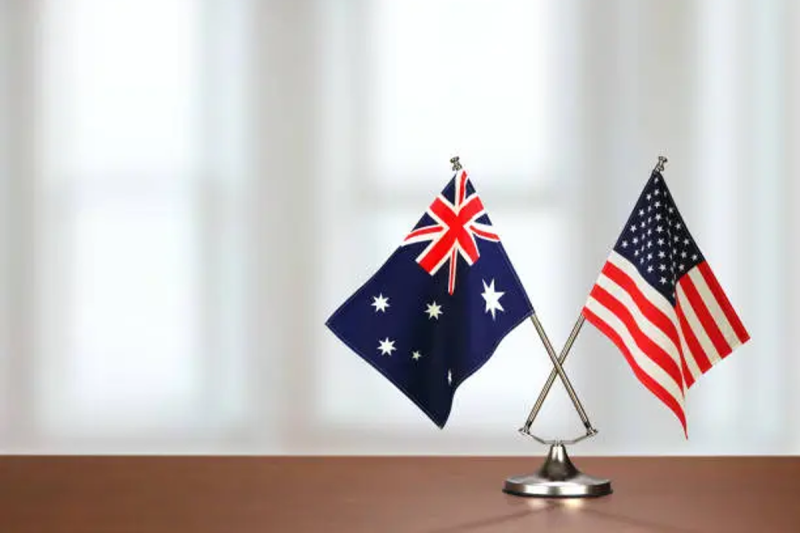
Australian Prime Minister Anthony Albanese and US President Donald Trump signed a rare earths deal during their meeting at the White House on Monday (October 20).
The meeting was set to focus on critical minerals and rare earths, with Albanese telling Bloomberg on Sunday (October 19) that it would also be an opportunity to “consolidate and strengthen” the Australia-US relationship.
According to insiders, the deal had been in the works for five months.
During the meeting, Trump said he “never had any doubts” about the countries’ bond, adding that “there’s never been anybody better.” For his part, Albanese described the deal as an US$8.5 billion pipeline ‘that we have ready to go.’
The signing happened after opening remarks from Trump, during which the US president called the deal a “key objective” in reducing reliance on China. “Within a year, we’ll have critical minerals and rare earths that you won’t know what to do with them,” Trump said, adding, ‘They’ll be worth about two dollars.’
China currently holds the world’s largest rare earths reserves and is the top producer by far, but Australia has been highlighted as a key player as trade tensions between the US and China ramp up.
The country is home to some of the most significant rare earths operations globally, such as Lynas Rare Earths’ (ASX:LYC,OTC Pink:LYSDY) Mount Weld mine, and Arafura Rare Earths’ (ASX:ARU,OTC Pink:ARAFF) Nolans project.
Last week, several companies, such as Nova Minerals (ASX:NVA,NASDAQ:NVA), were invited to brief the Australian government on key projects prior to the country’s meeting with the US.
Nova was instructed to include an overview of its flagship Estelle gold project, including the key minerals identified, planned expansion activities and the company’s engagement with US government agencies.
The same goes for Resolution Minerals (ASX:RML,OTCQB:RLMLF), which was invited for a briefer on its Idaho-based Horse Heaven gold-antimony-tungsten project.
Both Nova and Resolution were among the top-gaining mining stocks on the ASX last week.
Albanese and Trump also discussed the AUKUS submarine deal, a multibillion-dollar agreement between Australia, the UK and the US, which is geared at boosting security in the Indo-Pacific region.
When asked whether AUKUS is meant to be a “deterrent” for China, Trump answered yes. However, he also said he doesn’t think that will be needed as the US military is the best in the world.
‘We’re going to get along great with China,’ he said.
AUKUS is worth around US$239 billion, or AU$368 billion, over 30 years.
Starting in 2032, Australia plans to buy three Virginia-class submarines from the US, with the option to get two more. These will fill the gap while the UK and Australia develop a new submarine model. Trump also said the US is working on building more submarines for Australia and is going to expedite submarine exports to the country.
Australia is expected to receive the first of the new submarines in the early 2040s.
Securities Disclosure: I, Gabrielle de la Cruz, hold no direct investment interest in any company mentioned in this article.

Gold Fields (NYSE:GFI) has completed its AU$3.7 billion purchase of Gold Road Resources.
Gold Road rejected Gold Fields’ first acquisition proposal in March, saying it undervalued the company.
Following negotiations between the two parties, Gold Fields, through its wholly owned entity Gruyere Holdings, entered into a scheme implementation deed with Gold Road on May 5. Under the AU$3.7 billion deal, the companies agreed that Gold Road shareholders would receive fixed cash consideration of AU$2.52 per share.
‘The Scheme provides Gold Road shareholders with an opportunity to realise certain value for their Gold Road shares at a compelling premium,” said Gold Road Managing Director and CEO Duncan Gibbs at the time.
“This offer price represents a material premium to the undisturbed share price prior to the initial Gold Fields’ proposal and a material premium to longer term trading levels,’ he added.
Under the deal, Gold Fields will gain a 100 percent interest in the Gruyere project in Western Australia.
Gruyere, which the companies previously worked on together as a joint venture, currently holds an open-pit mineral resource of 6.04 million ounces, and ore reserves of 3.67 million ounces.
Its average annual gold production stands at at 350,000 ounces.
According to Gold Fields, all Gold Road shares are now owned by Gruyere Holdings. Following the scheme’s implementation, Gold Road is expected to apply to delist from the Australian Securities Exchange.
Securities Disclosure: I, Gabrielle de la Cruz, hold no direct investment interest in any company mentioned in this article.
Jindalee Lithium (JLL:AU) has announced Proposed issue of securities – JLL
Download the PDF here.
Here’s a quick recap of the crypto landscape for Friday (October 17) as of 9:00 p.m. UTC.
Get the latest insights on Bitcoin, Ether and altcoins, along with a round-up of key cryptocurrency market news.
Bitcoin (BTC) was priced at US$106,495, a 1.7 percent decrease in 24 hours. Its lowest valuation of the day was US$104,747, and its highest was US$107,411.
Bitcoin price performance, October 17, 2025.
Chart via TradingView.
The Bitcoin price remains under pressure. While sizable short liquidations of both Bitcoin and Ether have provided pockets of buying relief, overall market confidence is tempered. Volatility persists, leaving the market poised for further directional cues from key upcoming earnings and economic data releases.
Ether (ETH) was priced at US$3,830.31, a 1.2 percent decrease in 24 hours. Its lowest valuation of the day was US$3,726.31, and its highest was US$3,845.65.
Bitcoin derivatives metrics indicate a complex market environment with mixed signals.
While short-term buying pressure has occurred, underlying market sentiment remains bearish or neutral, with cautious trading behavior and no strong bullish conviction at this time.
Bitcoin liquidations have totaled approximately US$22.09 million in the last four hours, with short positions making up the majority, signaling a short squeeze or bullish pressure. Ether liquidations show a similar pattern, totaling US$20.86 million, the majority of which were short positions.
Futures open interest for Bitcoin has decreased by 1.56 percent to around US$70 billion, showing strong bearish sentiment. Ether futures open interest was unchanged at around US$44 billion, reflecting market neutrality.
The perpetual funding rate for Bitcoin was -0.009, and for Ether it was -0.015, indicating bearish market sentiment.
Bitcoin’s relative strength index stands at 34.05, indicating that the cryptocurrency is in a bearish/bullish/neutral momentum, phase but not yet deeply oversold.
CMC’s Crypto Fear & Greed Index has fallen far into fear territory, dipping to 28 on Friday from an earlier score of 32.
CMC Crypto Fear and Greed Index, Bitcoin price and Bitcoin volume.
Chart via CoinMarketCap.
A group of Japan’s largest banks, including MUFG Bank, Sumitomo Mitsui Banking and Mizuho Bank, are reportedly collaborating to launch a yen-backed stablecoin using MUFG’s Progmat platform.
The initiative aims to create an interoperable payment token for over 300,000 corporate clients. MUFG will be the first user for internal settlements. The stablecoin is expected to roll out by year end, potentially establishing Japan’s first unified bank-backed stablecoin network and accelerating crypto adoption in the region’s financial infrastructure.
Uniswap has expanded its web app to support the Solana blockchain, enabling users to trade Solana-based tokens, the platform announced in a blog post on Wednesday (October 15). This move broadens Uniswap’s reach beyond Ether, lowering transaction costs and speed for DeFi traders using Solana’s high-performance network.
Ripple will reportedly add a US$1 billion purchase of its native XRP cryptocurrency to its digital asset treasury.
Sources for Bloomberg said the treasury funds, which will be raised through a special purpose acquisition company, will be used to support Ripple’s ecosystem development, liquidity provision and strategic partnerships, reinforcing Ripple’s commitment to growing XRP’s adoption in global payments.
Securities Disclosure: I, Meagen Seatter, hold no direct investment interest in any company mentioned in this article.
Atlantic Lithium (A11:AU) has announced Pronounced Lithium-in-soil Anomalies
Download the PDF here.
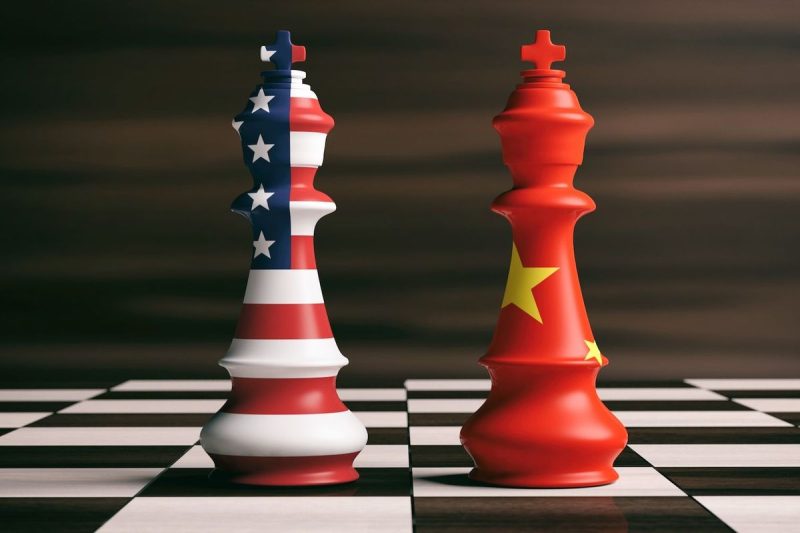
China has accused the US of “seriously distorting and exaggerating” Beijing’s newly expanded rare earths export controls, but signaled a willingness to hold talks before an expected meeting between US President Donald Trump and Chinese President Xi Jinping later this month.
“The US interpretation seriously distorts and exaggerates China’s measures, deliberately creating unnecessary misunderstanding and panic,” Ministry of Commerce spokesperson He Yongqian said Thursday (October 16).
According to the Global Times, he emphasized that Beijing’s restrictions are intended to protect national security and prevent the misuse of rare earths in military applications, not to destabilize global markets.
The remarks follow a sharp escalation in rhetoric between the two countries after China expanded its export controls last week to include five additional rare earth elements: holmium, erbium, thulium, europium and ytterbium.
The new rules will take effect in stages starting November 8, coinciding with the expiry of a six month trade truce between Washington and Beijing. Foreign companies that use Chinese materials or equipment to produce rare earths products will require Chinese export licenses, even if no Chinese firm is directly involved in the transaction.
Beijing has also vowed stricter scrutiny of applications tied to advanced semiconductors and defense systems, such as 14 nanometer chips and artificial intelligence used in weapons platforms.
Top US officials have accused Beijing of attempting to weaponize its dominance in the global rare earths supply chain, which accounts for about 70 percent of global production and more than 90 percent of processing capacity.
At a press briefing on Wednesday (October 15), US Trade Representative Jamieson Greer called China’s new measures a “global supply chain power grab” and warned that Washington and its allies “would not accept the restrictions.”
However, he also said China has not yet implemented the full regulatory system and suggested there is still room to de-escalate. “These are drafted, or in draft, so it’s quite real,” Greer said.
“But our expectation is that they won’t implement this, and that we’ll be able to be back to where we were a week ago, where we had the tariff levels we’ve agreed to and the flow of rare earths that we agreed to.”
Secretary of the Treasury Scott Bessent echoed the sentiment, telling CNBC that the Trump administration does not want to further inflame tensions, but will act decisively if Beijing moves forward with its restrictions.
“When we get an announcement like this week with China on the rare earths, you realize we have to be self-sufficient, or we have to be sufficient with our allies,” Bessent said.
He also accused China of using its dominance in rare earths refining and processing to slash prices and drive foreign competitors out of the market. Trump has threatened to impose 100 percent tariffs on Chinese goods starting on November 1 — or sooner — if Beijing moves ahead with the export controls.
Despite the mounting friction, both sides remain committed to a scheduled meeting between Trump and Xi in South Korea later this month, highlighting the indispensable nature of rare earths to modern industry.
They are used in electric vehicles, wind turbines, smartphones and, crucially, in US military systems such as F-35 fighter jets, Tomahawk missiles and Predator drones. Each F-35 is estimated to require more than 400 kilograms of rare earths for its stealth coatings, motors and radar systems.
In response to China’s dominance, Washington has ramped up efforts to secure alternative sources of critical minerals.
The Department of Defense earlier this year struck a deal with MP Materials (NYSE:MP), the largest US rare earths producer. It includes an equity stake, a price floor and an offtake deal to guarantee supply for defense applications.
Separately, the Trump administration is reportedly exploring a potential investment in Critical Metals (NASDAQ:CRML), a US-listed firm developing Greenland’s vast Tanbreez rare earths deposit.
Securities Disclosure: I, Giann Liguid, hold no direct investment interest in any company mentioned in this article.

Vince Lanci of Echobay Partners explains what’s driving silver’s record-setting price run.
According to Lanci, who is also a professor at the University of Connecticut and publisher of the GoldFix newsletter on Substack, the London market is facing a liquidity crisis as nations that would typically sell or lend their silver choose to keep the metal at home.
Securities Disclosure: I, Charlotte McLeod, hold no direct investment interest in any company mentioned in this article.