Sarama Resources (SRR:AU) has announced Q1 2025 Management’s Discussion and Analysis
Download the PDF here.
Sarama Resources (SRR:AU) has announced Q1 2025 Management’s Discussion and Analysis
Download the PDF here.
Tartana Minerals (TAT:AU) has announced Director led financing and change of Chairman
Download the PDF here.
(TheNewswire)
May 13, 2025 – TheNewswire – Vancouver, British Columbia, Canada JZR Gold Inc. (TSXV: JZR) (OTCQB: JZRIF) (the ‘ Company ‘ or ‘ JZR ‘) wishes to provide an update on operations at Vila Nova Gold Project (the ‘ Vila Nova Project ‘ or the ‘ Property ‘) located in the state of Amapa, Brazil.
ECO Mining Oil & Gaz Drilling Exploration EIRELI (‘ ECO ‘), the operator of the Vila Nova Project, commissioned the design, manufacture and installation of a gravimetric mill on the Property capable of processing up to 800 tonnes per day. ECO has advised the Company that testing of the mill has been completed and that the mill is fully operational. ECO has further indicated that it expects that the mill will commence operating on a limited basis as technical personnel are currently being trained to operate the mill, and processing material is being transported to the mill site. The Company has been advised that the Vila Nova Project is fully permitted, at the State and Federal level.
The Company possesses a 50% net profit interest in all net profit generated from the Vila Nova Project pursuant to a Joint Venture Royalty Agreement with ECO dated July 6, 2020, as amended on January 9, 2023.
The Company is also pleased to announce that it has appointed Mr. Sonny Janda to the board of directors. Mr. Janda has been involved with and brings experience from notable positions with Canadian publicly traded companies. He is a director and Executive Chairman of Desert Gold Ventures Inc., a precious metal exploration and early development mining company. He is also a director of Sierra Grande Minerals Inc., a North American focused exploration company, and a director of Grand Peak Capital Corp.
Mr. Janda currently serves as CEO and Director of the Janda Group®, a diversified family-owned business. The Janda Group® develops various types of real estate assets including master-planned mixed-use communities, high density residential and agricultural projects. Mr. Janda earned a Bachelor’s Degree in economics from Simon Fraser University.
‘JZR’s board and management are very pleased to welcome Sonny Janda to the Company’s board of directors. Mr. Janda’s knowledge and experience will strengthen the board and assist in our growth.’, commented Robert Klenk, Chief Executive Officer of JZR.
For further information, please contact:
Robert Klenk
Chief Executive Officer
rob@jazzresources.ca
Forward-Looking Statements
This news release contains forward-looking statements, which includes any information about activities, events or developments that the Company believes, expects or anticipates will or may occur in the future. Forward-looking statements in this news release include statements with respect to the anticipated start-up of the Mill and the planned commencement of bulk sampling on the Property. Forward-looking statements are subject to a variety of known and unknown risks, uncertainties and other factors that may cause the actual results, level of activity, performance or achievements of the Company to be materially different from those expressed or implied by such forward-looking statements. Risks that could change or prevent these statements from coming to fruition include, but are not limited to, that ECO may not succeed in bringing the Mill into operation and that the Mill may not operate as anticipated, or at all; that any minerals which may exist on the Property may not be economically mined or processed, if at all; that ECO may not be able to obtain the necessary permits related to the Mill or the Property to enable it to explore for, or mine or process minerals; that ECO may not be able to raise additional or sufficient funds that may be necessary to develop the Property or bring the Mill into operation and to continue its operation; the availability, or lack thereof, of labour, equipment and markets to develop or sell any products derived from the Property; and general business, economic, competitive, geopolitical and social uncertainties and regulatory risks. Although the Company has attempted to identify important factors that could cause actual results to differ materially from those contained in forward-looking information, there may be other factors that cause results not to be as anticipated, estimated or intended. There can be no assurance that such information will prove to be accurate, as actual results and future events could differ materially from those anticipated in such statements. Accordingly, readers should not place undue reliance on forward-looking statements. The forward-looking statements contained in this news release is expressly qualified in its entirety by this cautionary statement. The Company does not undertake to update any forward-looking statements, except as required by applicable securities laws.
Neither the TSX Venture Exchange nor its regulation services provider (as that term is defined in the policies of the TSX Venture Exchange) accepts responsibility for the adequacy or accuracy of this press release.
NOT FOR DISTRIBUTION TO U.S. NEWSWIRE SERVICES OR FOR RELEASE, PUBLICATION, DISTRIBUTION OR DISSEMINATION, DIRECTLY OR INDIRECTLY, IN WHOLE OR IN PART, IN OR INTO THE UNITED STATES.
Copyright (c) 2025 TheNewswire – All rights reserved.
News Provided by TheNewsWire via QuoteMedia
The US and China agreed on Monday (May 12) to pause the majority of their tariffs for a period of 90 days, marking a significant de-escalation in trade tensions between the two countries.
The US will reduce its tariffs on most Chinese goods from 145 percent to 30 percent; meanwhile, China will lower its tariffs on US goods by a similar amount, dropping them from 125 percent to 10 percent.
In addition to the suspension of tariffs, a number of non-tariff measures will be suspended or reversed. These include removing rare earths export restrictions and taking some US tech and defense firms off trade blacklists.
The US will maintain a 20 percent tariff geared at pressuring China to curb the flow of fentanyl to the US. The other 10 percent is the baseline levy that the US has imposed on imports from most nations.
The Trump administration also said the lower tariff rate won’t apply to automobiles, steel and aluminum.
The deal is expected to bring a resumption of shipments to west coast port cities like Los Angeles and Seattle. Recent data indicates a significant reduction in activity as tariffs have pushed the price of goods beyond what many importers can afford. Port activity has dropped to levels not seen since the COVID-19 pandemic disrupted global supply chains.
Although the tariff pause is only temporary, the 90 day break will give the countries time to negotiate a more permanent deal and mitigate a growing trade war that began shortly after Donald Trump assumed the presidency in January.
‘Now, while the 90-day pause is a big step towards easing tensions, it’s crucial to remember that it doesn’t guarantee a complete resolution of the trade war,’ he explained.
‘Once those 90 days are up, everyone will be keeping a close eye on what happens next, especially the results of ongoing negotiations and whether the tariffs will be permanently cut or brought back.’
Market response was mixed on Tuesday (May 13), with the S&P 500 (INDEXSP:INX) jumping 0.9 percent to reach 5,896 points in morning trading and the Nasdaq-100 (INDEXNASDAQ:NDX) surging 1.75 percent to 21,231 points. The Dow Jones Industrial Average (INDEXDJX:.DJI) went the opposite direction, shedding a half percent to 42,216 basis points.
The gold price fell as low as US$3,208.80 per ounce on Monday, a drop of more than US$100 compared to last week’s closing price. It regained some ground on Tuesday and was trading in the US$3,250 range by 1:00 p.m EDT.
The silver price also saw an immediate decline on Monday, but was trading in the US$33 per ounce range on Tuesday.
Securities Disclosure: I, Dean Belder, hold no direct investment interest in any company mentioned in this article.
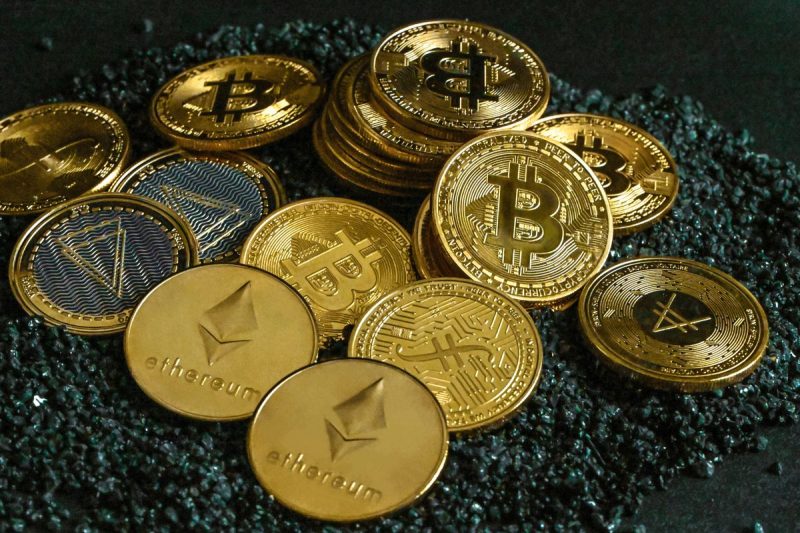
Bitcoin is prone to price volatility, with wide swings to the upside and downside, making it difficult for investors to know when the right time to buy the top crypto is.
There has been renewed interest in cryptocurrencies following the election of US President Donald Trump, leading the Bitcoin price to soar to new heights in late 2024, as investors and other industry insiders speculated on how the Trump administration’s policies could grow the sector and encourage mainstream adoption.
Trump ran on a platform that promised to make the US the Bitcoin capital of the world, vowing to establish a national reserve for the asset, and several states have already introduced legislation to create similar reserves within their borders.
The price of Bitcoin pulled back to under US$100,000 in February 2025 and fell as low as US$75,000 by April 9, marking a strong buying opportunity for crypto investors. Bitcoin has since rebounded, and on May 9 topped US$100,000 for the first time since early February.
Meanwhile, institutions and businesses like Michael Saylor’s Strategy have continued to buy Bitcoin by the millions, and spot Bitcoin exchange-traded funds (ETFs) remain popular.
This surge of interest paints a bullish picture of Bitcoin’s continued growth. However, buying Bitcoin isn’t a simple decision. Read on to learn the basics of Bitcoin fundamentals, price forecasts and methods for determining if now’s the right time to buy Bitcoin, including several popular technical trading indicators you should know.
Before you decide if Bitcoin is a good investment for you, you need to understand Bitcoin and the wider crypto market.
Bitcoin was the world’s first cryptocurrency, created in January 2009 by the mysterious Satoshi Nakamoto.
Conceived as a virtual alternative to fiat currency, Bitcoin is built atop blockchain technology, which it uses for both validation and security. Blockchain itself is a distributed digital ledger of transactions, operating through a combination of private keys, public keys and network consensus.
The best analogy to explain how this works in practice involves Google Docs. Imagine a document that’s shared with a group of collaborators. Everyone has access to the same document, and each collaborator can see the edits other collaborators have made. If anyone makes an edit that the other collaborators don’t approve of, they can roll it back.
Going back to Bitcoin, the virtual currency primarily validates transactions through proof of work. Also known as Bitcoin mining, this competitive and incredibly resource-intensive process is the means by which new Bitcoins are generated.
How it works is deceptively simple. Each Bitcoin transaction adds a new ‘block’ to the ledger, identified by a 64-digit encrypted hexadecimal number known as a hash. Each block uses the block immediately preceding it to generate its hash, creating a ledger that theoretically cannot be tampered with. Bitcoin miners collectively attempt to guess the encrypted hex code for each new block — whoever correctly identifies the hash then validates the transaction and receives a small amount of Bitcoins as a reward.
From an investment perspective, Bitcoin toes the line between being a medium of exchange and a speculative digital asset. It also lacks any central governing body to regulate its distribution. As one might expect, these factors together make Bitcoin quite volatile, and therefore somewhat risky as an investment target.
As for the source of this volatility, Bitcoin’s value is primarily influenced by five factors.
It’s widely known that no more than 21 million Bitcoins can be produced, and that’s unlikely to happen before 2140.
Only a certain number of Bitcoins are released each year, and this rate is reduced every four years by halving the reward for Bitcoin mining. The last of these ‘halvings’ occurred in April 2024 and the next one is due sometime in 2028. When it happens, there may be a significant increase in Bitcoin demand, largely driven by media coverage and investor interest.
Bitcoin demand is also strengthening in countries experiencing currency devaluation and high inflation.
It would be remiss not to mention that Bitcoin represents an ideal mechanism for supporting illicit activities — meaning that increasing cybercrime could itself be a demand driver.
It’s said that Bitcoin benefits from minimal production costs. This isn’t exactly true, however. Solving even a single hash requires immense processing power, and it’s believed that crypto mining collectively uses more electricity than some small countries. It’s also believed that miners were largely responsible for the chip shortage experienced throughout the pandemic due to buying and burning out vast quantities of graphics cards.
These costs together have only a minimal influence on Bitcoin’s overall value. The complexity of Bitcoin’s hashing algorithms and the fact that they can vary wildly in complexity are far more impactful.
Bitcoin’s cryptocurrency market share has sharply declined over the years. In 2017, it maintained a market share of over 80 percent. Bitcoin’s current market share is just over 60 percent.
Despite that fall, Bitcoin remains the dominant force in the cryptocurrency market and is the marker by which many other cryptocurrencies determine their value. However, there is no guarantee that this will always remain the case. There are now scores of Bitcoin alternatives, known collectively as altcoins, which you can learn more about here.
The most significant alternative to Bitcoin is Ethereum. Currently accounting for roughly 10 percent of the crypto market, Ethereum has long maintained its position as the second largest cryptocurrency. Some experts have suggested that Ethereum may even overtake Bitcoin, but others don’t see that as a possibility in the near future.
Bitcoin may itself be unregulated, but it is not immune to the effects of government legislation. For instance, China’s 2021 ban of the cryptocurrency caused a sharp price drop, though it quickly rallied in the following months. The European Union has also attempted to ban Bitcoin in the past, and Nic Carter, a partner at Castle Venture, accused the US of trying to do the same in February 2023.
There has been plenty of discussion surrounding the role of the US Securities and Exchange Commission (SEC) in regulating Bitcoin and other crypto as investment assets. The US made progress in establishing crypto legislation in 2024 when the House passed the Financial Innovation and Technology for the 21st Century (FIT21) Act in a bipartisan 279 to 136 vote on May 22 of last year. While that act has yet to make further progress, the new Trump administration has already loosened some crypto regulation with regards to crypto reporting for banks and decentralized finance businesses.
As with any speculative commodity, Bitcoin is greatly influenced by the court of public opinion.
Perhaps the best example of this occurred in 2021. At that time, a tweet from Tesla’s (NASDAQ:TSLA) Elon Musk caused Bitcoin’s price to drop by 30 percent in a single day. This also wiped about US$365 billion off the cryptocurrency market.
A more recent example occurred on January 9, 2024, leading up to the deadline for eight spot Bitcoin ETFs by the US Securities and Exchange Commission (SEC). In a since-deleted post on X, formerly known as Twitter, a hacker falsely stated that the SEC had approved all eight pending Bitcoin ETFs. This caused the price of Bitcoin to spike to US$48,000, but it quickly dropped back down to around US$46,000 after the SEC confirmed it was a hack, leading some analysts to consider it a ‘sell-the-news’ event.
The current US administration is crypto friendly, and Bitcoin and altcoins are seeing support in 2025. Could they go even higher, or should you wait for a dip to buy? Bitcoin is notoriously volatile, which can make it difficult to judge where the crypto is going next, but there are several strategies to help investors decide when to invest.
To determine if it is a good time to invest in Bitcoin, investors should pay attention to the market and listen to the experts, as generally speaking, Bitcoin’s price action is sentiment-driven. To keep on top of big news in the sector, follow our frequent Crypto Market Updates, which drop several times a week.
There are also different technical indicators that crypto traders use to help them decide if now is the time to buy or sell Bitcoin. We run through some popular indicators below.
For example, the Relative Strength Index (RSI) is a technical indicator used to gauge the momentum of a cryptocurrency’s price. It fluctuates on a scale from 0 to 100. By analyzing the magnitude of recent price changes relative to the previous 12-month period, the RSI helps traders identify whether a cryptocurrency is potentially overbought or oversold. An RSI above 70 often signals an overbought market, while an RSI below 30 suggests an oversold market.
Another metric to consider is the MVRV Z-score, calculated by subtracting the ‘realized’ value of Bitcoin, which is an average of the prices at which each Bitcoin was last moved, from the current market value. This is then divided by the standard deviation of the Bitcoin market cap.
This indicator helps identify when market value deviates strongly from realized value, which could show the market is at a turning point. A score above 7 likely indicates that Bitcoin is overvalued, meaning it could be due for a correction, while a score below 0 suggests that Bitcoin is undervalued, meaning it could be a good buying opportunity.
Finally, to gauge the overall market sentiment, investors can look at the Fear & Greed Index. This index provides a snapshot of how optimistic or fearful the market is about Bitcoin, with high readings potentially signaling overenthusiasm and a possible correction.
While it’s useful to learn these technical indicators to help you trade, it is important to remember that there’s no such thing as a guaranteed investment, especially when it comes to cryptocurrencies. On the one hand, there’s virtually no chance that Bitcoin will experience a crash to zero. On the other hand, we also cannot take for granted that its value will continue to climb.
For those considering Bitcoin as a long-term investment, it’s worth considering experts’ thoughts on Bitcoin in the future.
Veteran analyst Peter Brandt said in February 2024 that if Bitcoin could break past its previous high, the cryptocurrency could easily reach a new record of US$200,000 by September 2025.
Only two weeks after the interview, Bitcoin surpassed the US$72,000 mark in the early hours of March 11. On December 4, one month after the US presidential election, Bitcoin reached US$100,000 for the first time, an elusive target it has surpassed a handful of times since.
Not everyone is so optimistic about Bitcoin’s prospects. Pav Hundal, lead market analyst at Swyftx, has expressed concerns about Bitcoin’s future in the context of continued geopolitical upheaval and economic uncertainty.
Billionaire investor Warren Buffet, meanwhile, has not minced words regarding his opinion on Bitcoin and its future. According to Buffet, Bitcoin is an unproductive asset with no unique value. He also feels that it doesn’t count as a true currency — in fact, he called it “rat poison.” Moreover, he believes that the crypto market as a whole will end badly.
Regardless of whether you believe Bitcoin’s proponents or naysayers, it’s clear that it has some incredibly prominent backers in both the investment world and the wider business landscape. Business analytics platform Strategy (NASDAQ:MSTR) is by far the largest public company in the Bitcoin space, with 568,840 Bitcoin to its name as of May 13, 2025. The next three public companies with the largest Bitcoin holdings are Marathon Digital Holdings (NASDAQ:MARA) with 48,237 Bitcoin, Riot Platforms (NASDAQ:RIOT) with 19,211, Tesla with 11,509 and Hut 8 (NASDAQ:HUT) with 10,264.
The US, China and the United Kingdom hold the top three spots for countries with the most Bitcoin holdings, with 207,189, 194,000 and 61,000 Bitcoin respectively at that time.
There are also plenty of individuals with large holdings, the most significant of which is believed to be Bitcoin’s creator, Satoshi Nakamoto. Other prominent names include Michael Saylor, Cameron and Tyler Winklevoss and Tim Draper.
To help increase the odds of crypto being a good investment, investors in the Bitcoin market should learn the basics of safely investing in Bitcoin.
The good news is that investing in Bitcoin is actually quite simple. If you’re purchasing through a stockbroker, it’s a similar process to buying shares of a company. Otherwise, you may need to gather your personal information and bank account details. It’s recommended to secure your network with a VPN prior to performing any Bitcoin transactions.
The first step in purchasing Bitcoin is to join an exchange. Coinbase Global (NASDAQ:COIN) is one of the most popular, but there’s also Kraken and Bybit. If you’re an advanced trader outside the US, you might consider Bitfinex.
Once you’ve chosen an exchange, you’ll need a crypto wallet. Many first-time investors choose a software-based or ‘hot’ wallet either maintained by their chosen crypto exchange or operated by a service provider. While simpler to set up and more convenient overall, hot wallets tend to be less secure as they can be compromised by data breaches.
Another option is a ‘cold’ wallet — a specialized piece of hardware specifically designed to store cryptocurrency. It’s basically a purpose-built flash drive. If you plan to invest large amounts in crypto, a cold wallet is the better option.
Once you’ve acquired and configured your wallet, you may choose to connect either the wallet or your crypto exchange account to your bank account. This is not strictly necessary, and some seasoned investors don’t bother to do this.
Finally, with your wallet fully configured and your exchange account set up, it’s time to place your order.
The most important thing to remember about Bitcoin is that it is a high-risk asset. Treat Bitcoin as a means of slowly growing your existing wealth rather than an all-or-nothing gamble, and never invest money that you aren’t willing to lose..
As with other investments, it’s important to hedge your portfolio. Alongside Bitcoin, you may want to consider investing in other cryptocurrencies like Ethereum, or perhaps an altcoin. You may also want to explore other blockchain-based investments, given that even the most stable cryptocurrencies tend to be fairly volatile.
It’s also key to ignore the hype surrounding cryptocurrencies. Recall how many people whipped themselves into a frenzy over non-fungible tokens in 2022. More than 95 percent of the NFTs created during that time are now worthless.
Make decisions based on your own market research and advice from trusted — and more importantly, certified — professionals. If you’re putting up investment capital based on an influencer’s tweets, you are playing with fire.
You should also start small. A good rule of thumb is not to dedicate more than 10 percent of your overall capital to cryptocurrency. Even that number could be high — again, it’s all about moderation.
Make sure to prioritize cybersecurity as well. Cryptocurrencies are an immensely popular target for cybercriminals. In addition to maintaining a cold wallet, make sure you practice proper security hygiene. That means using a VPN and a password manager while also exercising mindfulness in how you browse the web and what you download.
Finally, make an effort to understand what cryptocurrencies are and how they work. One of the reasons Sam Bankman-Fried was able to run FTX as long as he did was because many of his investors didn’t fully understand what they were putting their money into. Don’t let yourself be fooled by buzzwords or lofty promises about Web3 and the metaverse.
Do your research into the technology behind it all. That way, you’ll be far better equipped to recognize when something is a sound investment versus a bottomless money pit.
Given Bitcoin’s volatility, it’s understandable that you might be leery of making a direct investment. The good news is that you don’t have to. You can indirectly invest into the crypto space through mutual funds, stocks and ETFs.
ETFs are a popular and flexible portfolio choice that allows investors to benefit from a sector’s performance without the need to directly own individual stocks or assets. They are an especially appealing option in the cryptocurrency market as the technical aspects of purchasing and holding these coins can be confusing and intimidating for the less technologically inclined.
Bitcoin futures ETFs provide exposure to the cryptocurrency’s price moves using Bitcoin futures contracts, which stipulate that two parties will exchange a specific amount of Bitcoins for a particular price on a predetermined date.
Conversely, spot Bitcoin ETFs aim to track the price of Bitcoin, and they do so by holding the asset. Spot Bitcoin ETFs have been offered to Canadians since 2021, and there are now 13 Canadian cryptocurrency ETFs you can buy. Spot Bitcoin ETFs began trading in the US on January 11, 2024. For investors interested in blockchain technology, there are also several blockchain ETFs.
Do a bit of research and touch base with your stockbroker or financial advisor before you go in this direction.
Bitcoin is a fascinating asset. Simultaneously a transactional tool and a speculative commodity, it’s attracted the attention of investors almost since it first hit the market. Unfortunately, it’s also incredibly volatile.
For that reason, while current market conditions are favorable for anyone considering buying Bitcoin, it is an asset you should purchase only at your own risk. Because while Bitcoin may have the potential for significant returns, you may also lose most of your investment. If that knowledge doesn’t bother you, then by all means, purchase away.
Otherwise, there are better — less volatile — options for your capital.
ARK Invest CEO Cathie Wood is extremely bullish on Bitcoin, telling Bloomberg in February 2023 that her firm believes the cryptocurrency could reach a value of US$1 million by 2030. A year later, Wood hiked her 2030 bitcoin price prediction astronomically to US$75 trillion.
Securities Disclosure: I, Meagen Seatter, hold no direct investment interest in any company mentioned in this article.

Pan American Silver (TSX:PAAS,NYSE:PAAS) has entered into a definitive agreement to acquire MAG Silver (TSX:MAG,NYSEAMERICAN:MAG) in a transaction valued at approximately US$2.1 billion, further cementing its position as a top-tier silver producer in the Americas.
The acquisition will bring MAG’s 44 percent stake in the high-grade Juanicipio silver and gold mine in Mexico into Pan American’s portfolio, expanding the company’s exposure to low-cost, high-margin silver production.
Under the deal, MAG shareholders will receive a mix of US$500 million in cash and 0.755 Pan American shares for each MAG share held — a 21 percent premium based on closing prices as of May 9.
Upon the deal’s closing, expected later this year pending regulatory approvals, MAG shareholders will own roughly 14 percent of Pan American on a fully diluted basis.
Pan American CEO Michael Steinmann called the deal “transformational’ in the company’s Sunday (May 11) press release, citing Juanicipio’s strong production profile and future exploration potential.
‘Our acquisition of MAG brings into Pan American’s portfolio one of the best silver mines in the world,’ he said.
‘Juanicipio is a large-scale, high-grade, low-cost silver mine that will meaningfully increase Pan American’s exposure to high margin silver ounces. Furthermore, we see future growth opportunities through the significant exploration potential at Juanicipio as well as MAG’s Deer Trail and Larder properties,’ Steinmann continued.
MAG President George Paspalas echoed this sentiment, noting that the transaction delivers immediate value and long-term upside through continued exposure to Juanicipio within Pan American’s diversified asset base.
Juanicipio, located in Mexico’s prolific Zacatecas district, processed 1.33 million metric tons of ore in 2024, producing 18.6 million ounces of silver and 39,029 ounces of gold — up over 10 percent from 2023.
Operated by Fresnillo (LSE:FRES,OTC Pink:FNLPF), which owns the remaining 56 percent stake, the mine posted an average silver head grade of 468 grams per metric ton and is set to deliver up to 16.7 million ounces of silver in 2025.
Pan American’s 2024 output totaled 21.1 million ounces of silver and 892,000 ounces of gold, in line with guidance.
The company has operations across seven countries, with its key assets including the La Colorada mine in Mexico and the Jacobina gold mine in Brazil. Pan American ended last year with US $887.3 million in cash and short-term investments, bolstered by its recent divestment of the La Arena mine in Peru.
News of the deal sent shares for both companies higher in pre-trading hours on Monday (May 12).
As of 9:13 a.m EST, Pan American shares were up 6.5 percent from the previous day to trade for US$27.21, while MAG shares had seen a 6.07 percent uptick over the same period, trading for C$23.58.
Securities Disclosure: I, Georgia Williams, hold no direct investment interest in any company mentioned in this article.
White Cliff Minerals Limited (“WCN” or the “Company”) (ASX: WCN; OTCQB: WCMLF) is pleased to announce further assay results from the recent reverse circulation drilling campaign at the Company’s 100% owned Rae Copper Project in Nunavut, Canada.
“Assays from Rae continue to exceed expectations: 175m @ 2.5% Cu, 58m @ 3.08% Cu, 52m @ 1.16% Cu and now further significant intercepts of 63m @ 2.23% Cu and 72m @ 1.08%. These high-grade intercepts from surface are rare in the exploration world as explorers over recent times have had to go deeper and deeper to identify additional copper resources.
Being the first mover into this highly prospective location, after more than a decade of inactivity due to political constraints – securing the licences organically and now having undertaken our first drill program, positions us well both for future work programmes and facilitate further discoveries.
We are not surprised by the increased attention into the broader region by many players. Infrastructure enhancements at Yellowknife and increased activity along the north-west passage provide far easier access than in previous decades when the last serious exploration was undertaken.
More recently we have seen increased state and federal conversations around road and port infrastructure development in this area to support regional development. Logistics that will positively impact the Rae Project. Given the project area is less than 80km by road to the deep-water port of Kugluktuk, these results will surely focus the spotlight on the development opportunities and benefits to the local and regional stakeholders.
The Rae Project area has the potential to help meet the global production void through proper systematic assessment of this underexplored copper landholding and we continue to look forward to updating shareholders with the next round of results as they come to hand over the coming weeks.”
Troy Whittaker – Managing Director
Click here for the full ASX Release
John Feneck, portfolio manager and consultant at Feneck Consulting, shares his updated outlook for gold and silver prices, outlining key support and resistance levels.
He also discusses precious metals and critical minerals stocks that he’s watching.
Securities Disclosure: I, Charlotte McLeod, hold no direct investment interest in any company mentioned in this article.
From May 11 to 17, world leaders in blockchain will gather in Toronto for Canada Crypto Week, a series of events highlighting the evolution of digital finance and the Web3 economy.
In focus this year are deep dives into pressing topics like regulation, tokenization, decentralized finance (DeFi), the future of Web3 infrastructure and how artificial intelligence (AI) will transform the crypto landscape.
Also on the agenda is Canada’s growing role in the global crypto conversation.
These events will feature keynote speakers, regulatory panels and technology presentations from industry leaders at the forefront of innovation. Be sure to follow our updates this week as they unfold.
The Blockchain Futurist Conference will kick off with a virtual welcome from TRON founder Justin Sun and a panel on global Web3 regulation, with representatives from the Digital Chamber and Hong Kong Monetary Authority.
The morning agenda includes a presentation on tokenization by IHodlLife founder CEO Tristan Schroeder, and a fireside chat about Canada’s stablecoin landscape. In addition, Ethereum co-founder and Decentral founder Anthony Di Iorio will deliver a keynote address on the blockchain industry’s evolution.
Morning sessions at the Blockchain Futurist Conference will also cover security in crypto exchanges, token utility and Canadian regulatory perspectives, featuring representatives from Kraken and Convoy Finance.
Consensus, CoinDesk’s flagship blockchain and Web3 conference, will feature over 500 speakers, including notable figures such as Kevin O’Leary, Dave Portnoy and Coinbase Canada CEO Lucas Matheson.
Attendees can expect a diverse range of programming across multiple stages, covering topics like Bitcoin mining, AI integration and digital asset wealth management.
The conference will also host the CoinDesk PitchFest, showcasing early stage Web3 startups, and provide ample networking opportunities for professionals in the crypto and blockchain industries.
For investors, Canada Crypto Week is a snapshot of where the industry is headed and where opportunities may lie.
With regulators, entrepreneurs and developers sharing various stages, the events offer rare insight into how the rules, tools and infrastructure of tomorrow are being shaped today.
As institutional interest in crypto grows and traditional finance increasingly integrates blockchain solutions, conferences like these are becoming valuable barometers of market sentiment and direction.
Here are a few topics that will be highlighted:
1. Regulation
From both a domestic and international lens, regulation will be a central theme. Canada’s evolving approach of balancing innovation with consumer protection will be explored in depth.
2. Tokenization
As tokenization gains traction in everything from real estate to traditional securities, this year’s presentations will spotlight its practical applications and the tech needed to support mainstream adoption.
3. The Future of Web3
Blockchain Futurist will bring builders together to discuss what’s next for the decentralized internet, covering everything from scalability to mass adoption hurdles.
Securities Disclosure: I, Meagen Seatter, hold no direct investment interest in any company mentioned in this article.

Reach Resources Limited (ASX: RR1 & RR1O) (“Reach” or “the Company”) is pleased to announce the completion of a new Mineral Resource Estimate (MRE) for the Pansy Pit deposit at its Murchison South Gold Project. The estimate, prepared by independent consultants Mining Plus, reported above a cut-off grade of 0.5g/t Au, confirms a near-surface inferred resource of 72kt @ 2.5g/t Au for 5,800 oz. This adds to the existing 61,300 oz gold resource at the nearby Blue Heaven deposit, bringing the total gold resource inventory at Murchison South to approximately 67,100 oz.
HIGHLIGHTS
The Pansy Pit MRE is shown in Table 1 on page 3.
Click here for the full ASX Release